The Power of Uniform Connectedness in Product Design
The strongest grouping principle, and how to use it.
Understanding the Law
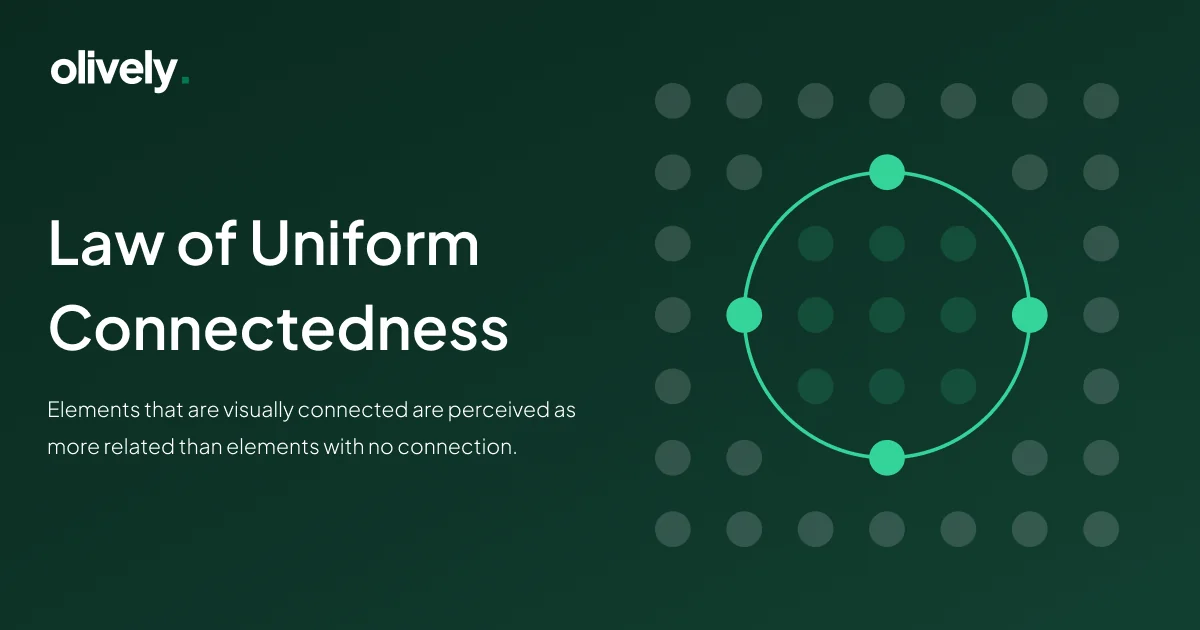
At its core, the Law of Uniform Connectedness emphasizes the human brain’s innate tendency to seek patterns and connections in visual stimuli. When elements are visually linked through colors, lines, frames, or shapes, users instinctively interpret them as belonging to a cohesive system. This principle is pivotal in creating a smooth and intuitive user experience.
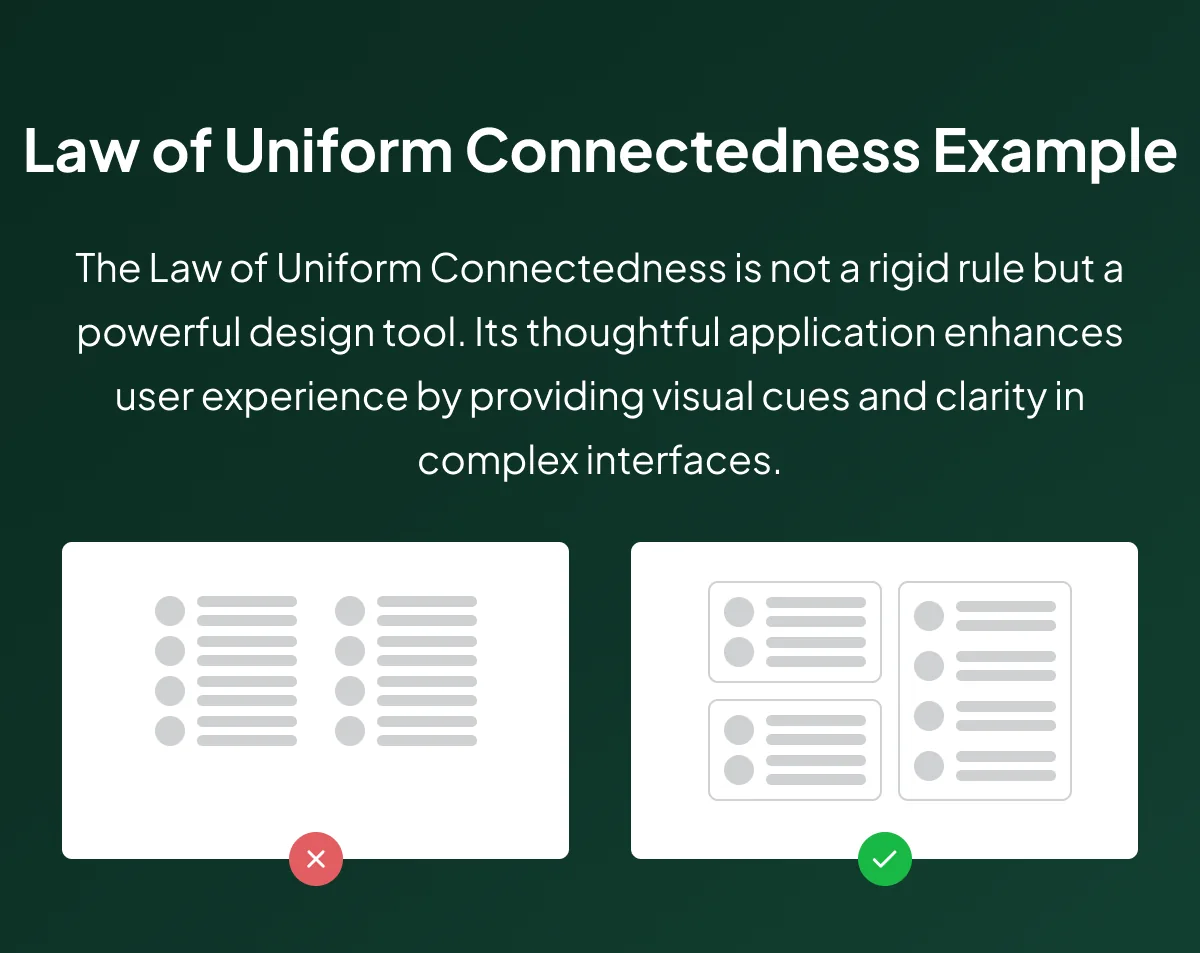
Example of The Law of Uniform Connectedness in UI Design
Importance in Product Design
Implementing the Law of Uniform Connectedness in product design goes beyond aesthetics; it’s a strategic choice that directly impacts usability and user engagement. In a digital landscape saturated with information, establishing clear visual connections is a design strategy that enhances user understanding, reduces confusion, and easily guides users through a product interface.

Example of the Uniform Connectedness in Gmail
Beyond Aesthetics
The Law of Uniform Connectedness transcends mere visual appeal. It is a powerful tool for conveying relationships within a design, simplifying user paths, and contributing to a cohesive user experience. By strategically implementing this law, designers create interfaces that look unified and function cleanly, aligning with user expectations and mental models.
Takeaways for Designers
Organized Layout
Utilize visual connections to create an organized and coherent layout, aiding users in working in the interface effortlessly.
Intuitive Navigation
Guide users cleanly by establishing clear visual relationships between different elements, facilitating a natural flow through the product.
Reduced Confusion
Minimize user confusion by visually connecting functions or content with a common purpose, reinforcing their relationship.
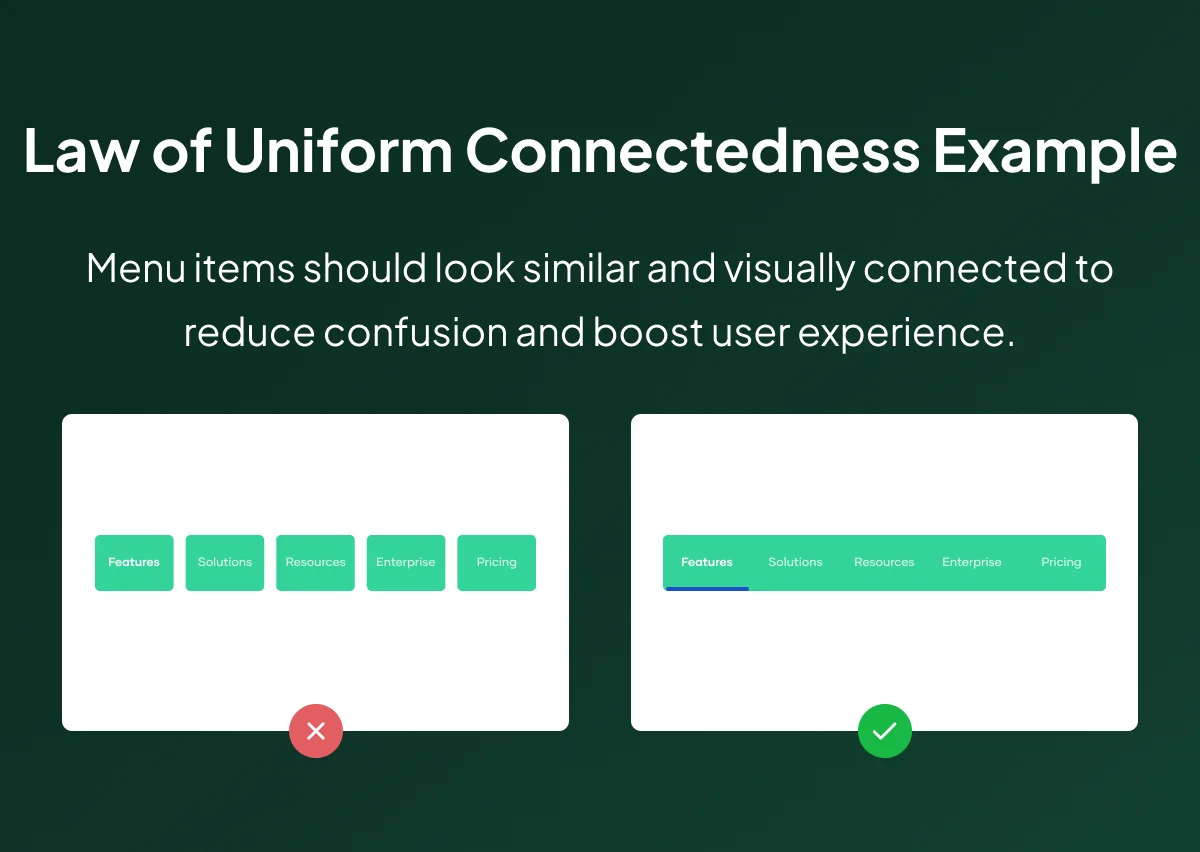
Reduced Confusion & Intuitive Navigation — The Law of Uniform Connectedness
Emphasized Hierarchy
Use visual connections to establish hierarchy, drawing attention to more critical elements with stronger visual elements.
Contextual Understanding
Enhance user understanding of context by employing consistent visual connections, which is particularly beneficial when information is scattered across different pages or screens.
Real-World Applications
Examining popular digital platforms reveals the pervasive application of the Law of Uniform Connectedness:
GitHub
Visual connections through commit history and branches enhance users’ understanding of project evolution within repositories.

GitHub — The Law of Uniform Connectedness
Microsoft Teams
The platform employs uniform connectedness to visually link conversations, files, and collaborative tools, ensuring a smooth teamwork environment.

Microsoft Teams’ UI
Wix
Utilizing visual elements, Wix establishes uniform connectedness in website building, simplifying users' understanding of the relationship between various design components.

Wix’s Product Design
Evernote
The platform employs visual connections to group notes, tags, and notebooks, facilitating an organized and intuitive note-taking experience.
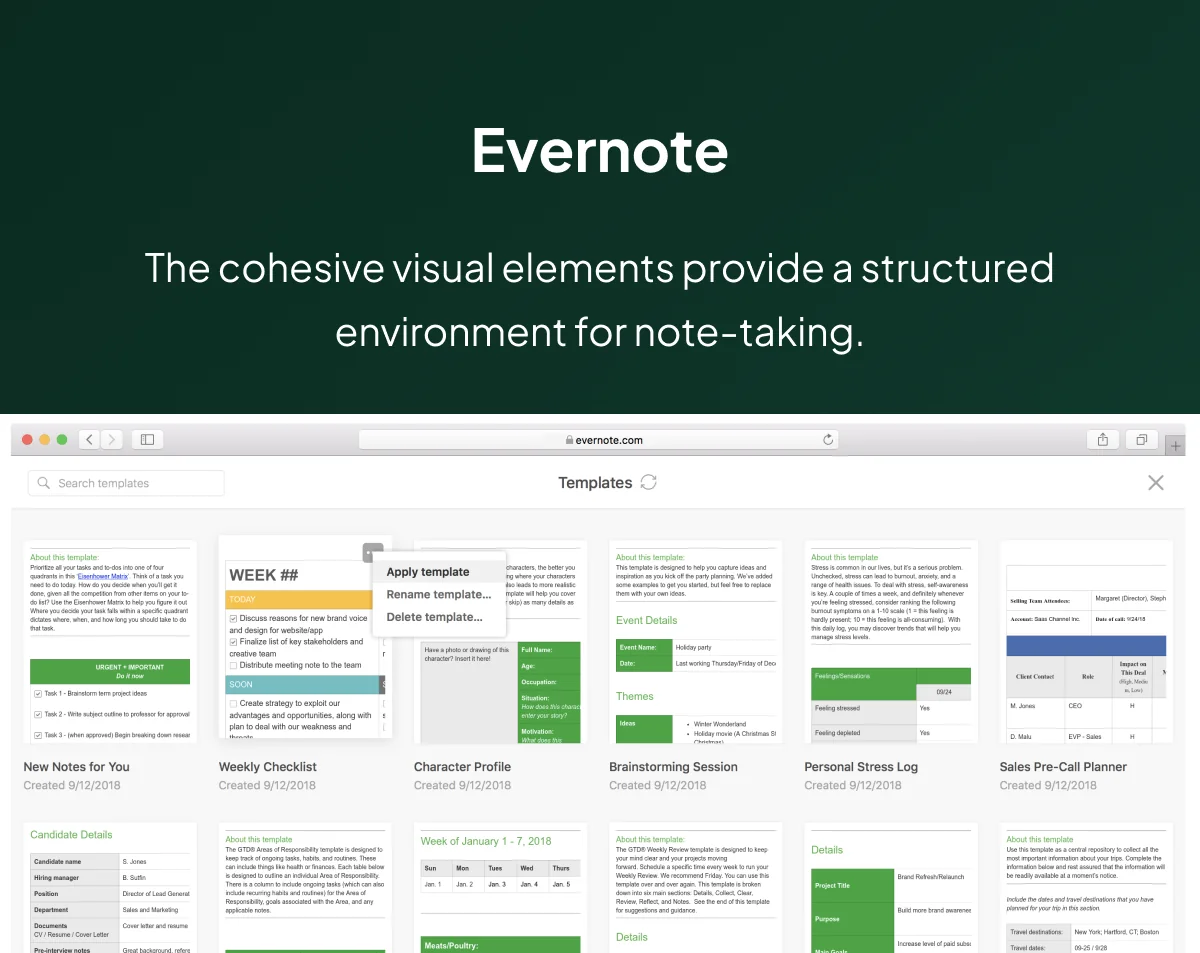
Note Templates in Evernote
Salesforce
The platform employs visual connectedness in dashboards, ensuring a unified view of data relationships for enhanced user comprehension.

Salesforce’s User Experience
Conclusion
In the dynamic world of digital design, the Law of Uniform Connectedness emerges as a guiding principle and a strategic compass for designers working in the complexities of user interaction. By nurturing clear visual connections, designers open up the potential to simplify user experiences, improve comprehension, and craft digital landscapes that resonate with users across diverse platforms.
Connect with Us
Should you seek further guidance on integrating these principles into your design endeavors, don’t hesitate to reach out. At Olively, I work with teams on decisions like this one.
Stay Informed
For more insightful updates on design principles and industry trends, follow me here and connect on my personal LinkedIn page. Let’s continue to explore the changing landscape of digital design and user experience.
If you're weighing a decision like this on a live product, here's how I work with teams.
Part of the UX laws worth knowing — seventeen principles grouped by the decision each one helps you make.
Common questions
What is uniform connectedness?
A Gestalt principle: elements that are visually connected — by a shared background, a border, or a line — are perceived as more related than elements that are merely near each other.
How is uniform connectedness different from proximity?
Proximity groups by distance; uniform connectedness groups by an explicit visual link. Connection is the stronger signal, which is why a bordered card reads as one unit even when its contents are loosely spaced.
Where is uniform connectedness useful?
Anywhere a group needs to survive a cramped layout — cards, table rows, form sections — or where proximity alone would be ambiguous because the spacing has to stay tight.