The Power of the Law of Pragnanz in Product Design
People resolve complexity into the simplest form available.

Understanding the Law of Pragnanz
Imagine handling a website or interacting with an app — the Law of Pragnanz silently influences your perceptions. Originating from Gestalt principles, this law posits that our minds naturally organize complex visual information into simpler, more coherent structures. It steers our cognitive processes, guiding the interpretation of intricate patterns into clear, comprehensible forms.
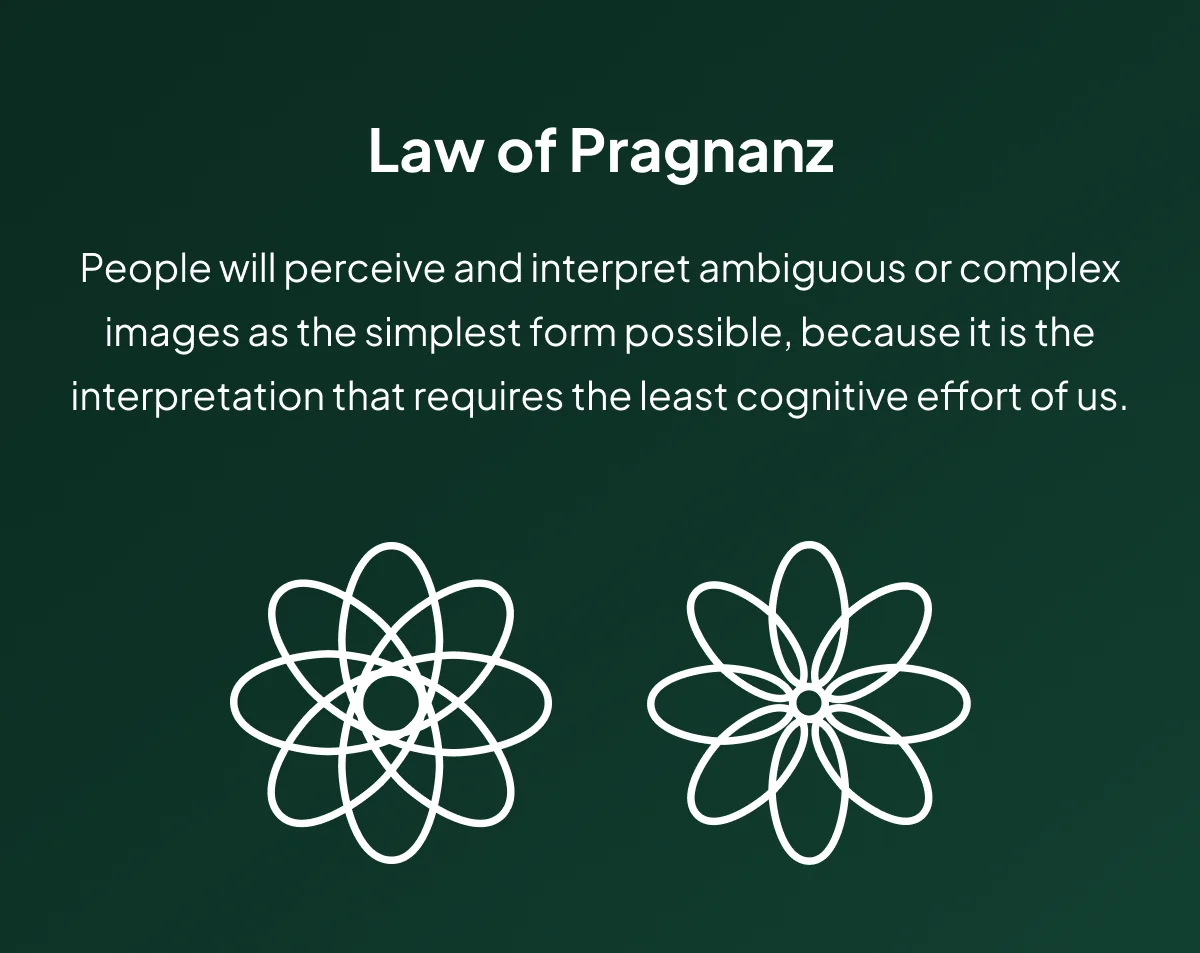
Definition of the Law of Pragnanz
Importance in Product Design
In the dynamic landscape of product design, where user experience reigns supreme, the Law of Pragnanz takes center stage. Its deep relevance influences design choices to create interfaces that resonate with users. The three pillars of Pragnanz — simplicity, organization, and symmetry — play a pivotal role in shaping user interactions.
Striking a Balance
While embracing the Law of Pragnanz is paramount, balancing simplicity and functionality is equally key. Designs need to be intuitive without sacrificing essential features. Achieving this equilibrium ensures that the user experience is visually pleasing and highly functional.
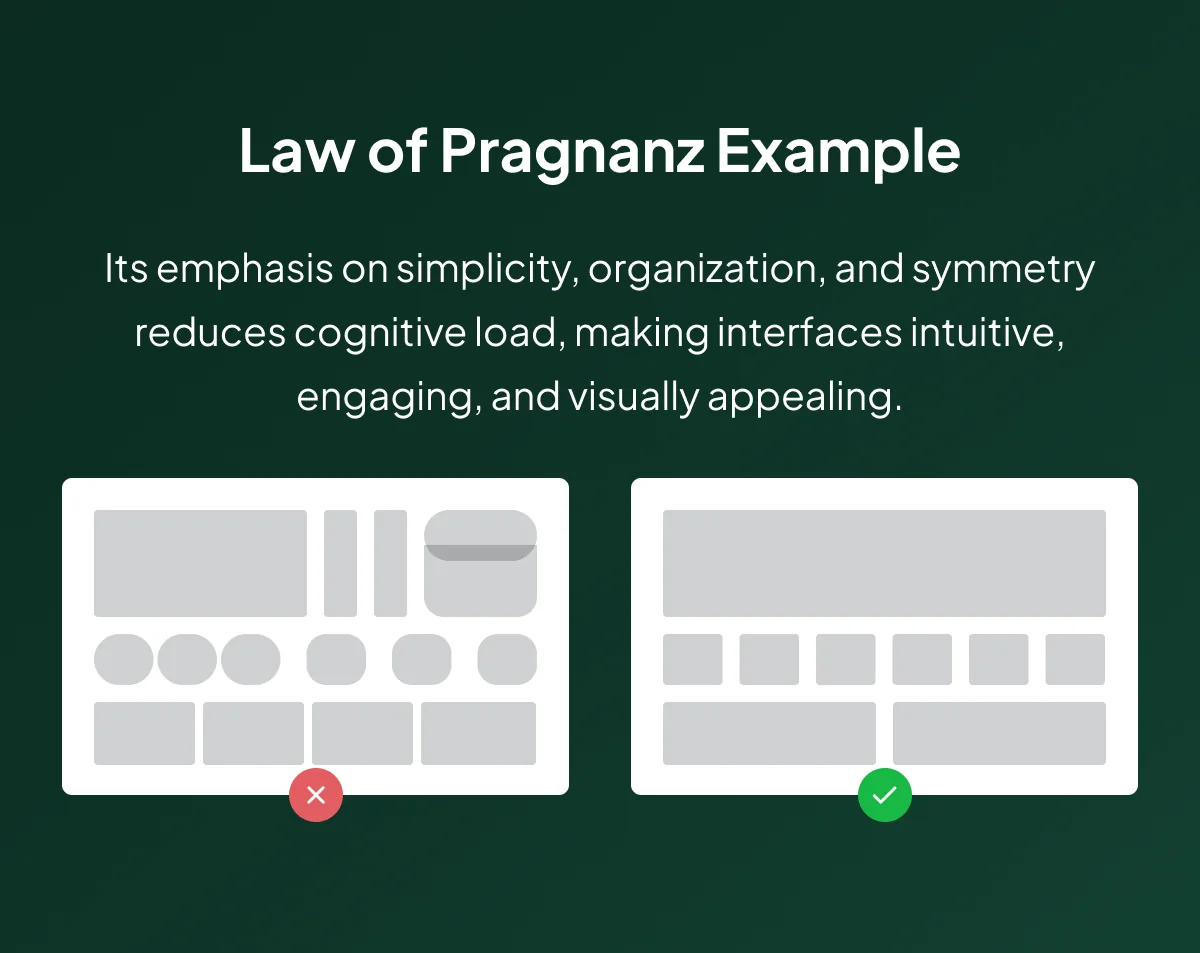
Example of the Law of Pragnanz in Product Design
Key Takeaways
Simplicity Matters: Users gravitate towards easily understood and navigated designs. A clean, minimalist interface reduces cognitive load and allows users to focus on tasks without distractions.
Structured Navigation: A well-organized layout facilitates effortless navigation, enhancing user satisfaction. By grouping related elements and establishing a clear visual hierarchy, designers create an intuitive, experience that stays out of the way.
Visual Harmony Through Symmetry: Symmetrical designs are not just visually pleasing; they promote a sense of balance and harmony. Humans are naturally drawn to symmetry, and incorporating it into design significantly improves user engagement and satisfaction.
Reduced Cognitive Load: Prioritizing simplicity reduces mental strain, improving overall usability.
User Loyalty: Consistently applying Pragnanz principles builds trust, loyalty, and positive brand perception.
Impactful Examples
1. IKEA
The simplicity ensures users can find and view products effortlessly, and the organized layout enhances the browsing and shopping experience. Symmetry in elements like product grids contributes to visual appeal.
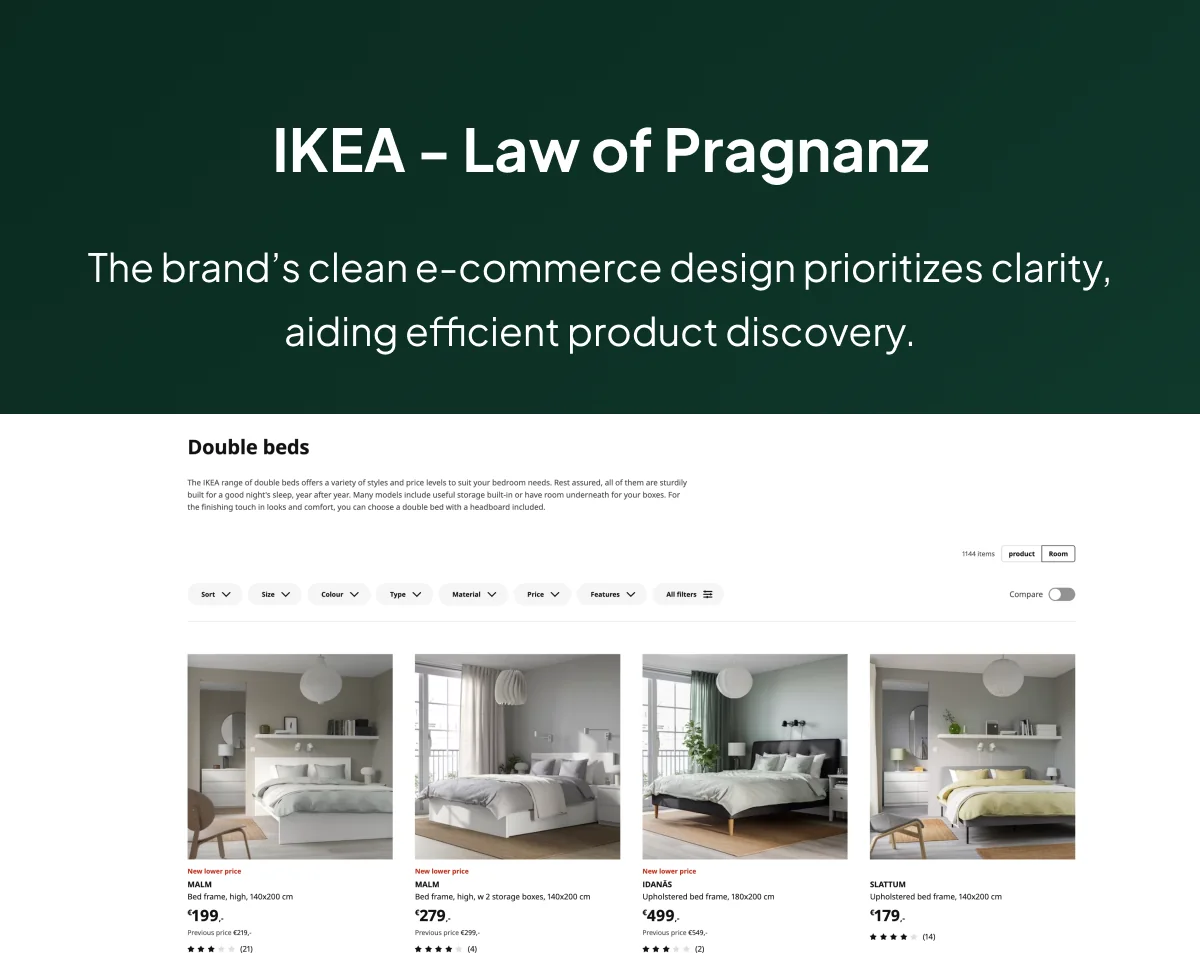
IKEA Example
2. Facebook
Facebook employs a structured layout and clear visual hierarchy, adhering to the Law of Pragnanz. This enhances user engagement by presenting information in an organized manner. Users can easily navigate through the platform, and the streamlined design prioritizes simplicity for a experience that stays out of the way.
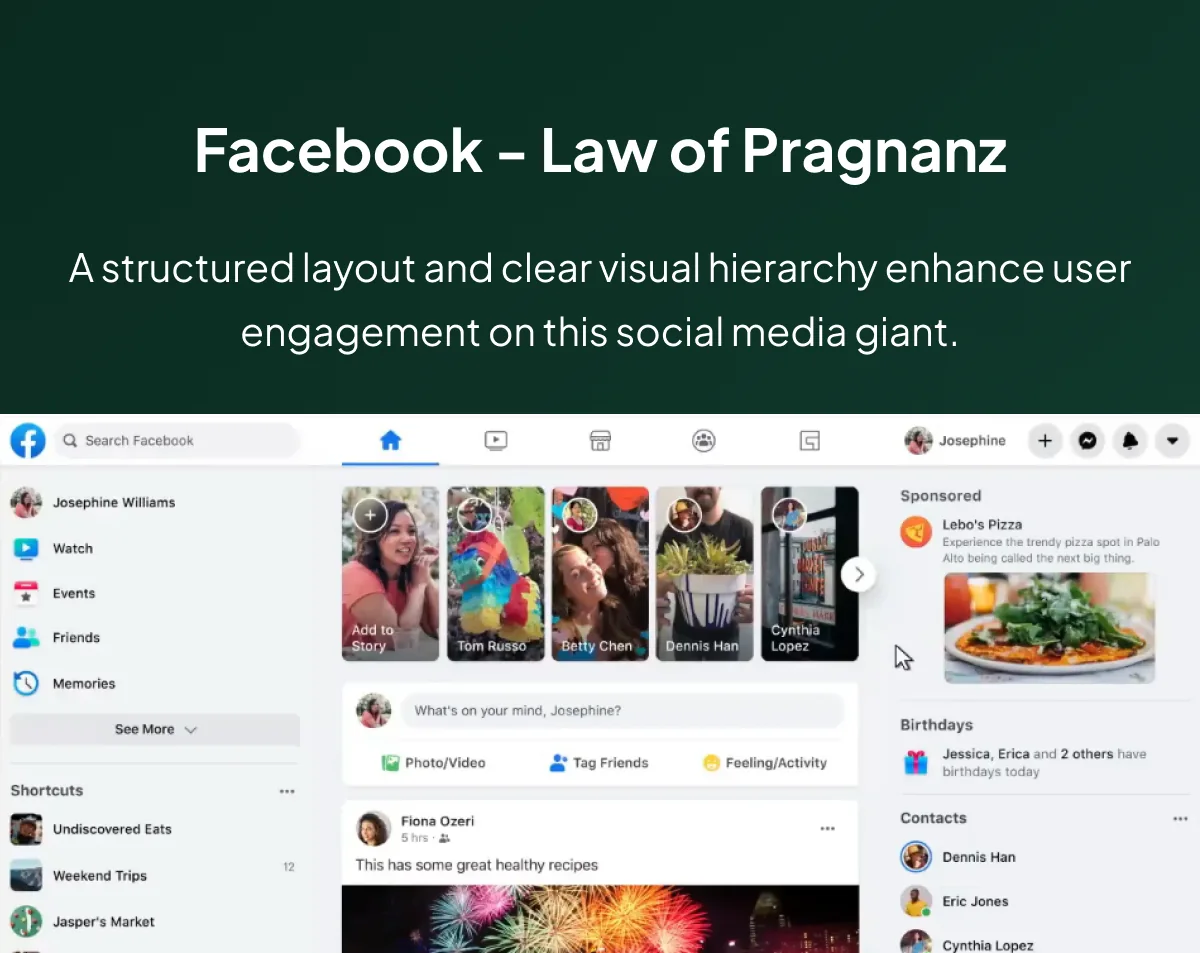
Facebook Example
3. Pinterest
Pinterest’s symmetrical grids and minimalistic design align with the Law of Pragnanz. The platform’s visually pleasing aesthetics result from its commitment to simplicity, making it easy for users to organize and discover content. The clear visual structure contributes to an intuitive and satisfying experience.

Pinterest Example
4. Twitter
Twitter’s streamlined interface and clear organization reflect the principles of the Law of Pragnanz. By straightforwardly presenting content, users can easily consume information. The platform’s design focuses on simplicity, ensuring that users can engage with tweets and discussions without unnecessary distractions.

Twitter Example
5. Dropbox
Dropbox’s file storage service is designed with simplicity in mind, aligning with the Law of Pragnanz. The intuitive design facilitates effortless file management, allowing users to organize and access their files without unnecessary complexities. The platform’s commitment to simplicity enhances the user experience in handling digital assets.

Dropbox Example
In Business and Marketing
In business and marketing, the Law of Pragnanz ensures that brand communications are clear, visually appealing, and aligned with user expectations. Consistent application fosters customer trust, brand loyalty, and a positive perception, driving business success.

Spotify Marketing Campaign — Example
Conclusion
The Law of Pragnanz, rooted in human psychology, guides designers to simplify complexity and create delightful user experiences. Its impact extends beyond aesthetics; it shapes how users interact with products, influencing loyalty and brand perception. As businesses navigate the competitive landscape, understanding and integrating Pragnanz principles into design processes become advantageous and imperative for success in the digital age.
Feel free to seek further guidance on applying these principles to your design endeavors.I work with teams on decisions like this one.
For more insights and updates, follow me here and on my LinkedIn page.
If you're weighing a decision like this on a live product, here's how I work with teams.
Part of the UX laws worth knowing — seventeen principles grouped by the decision each one helps you make.
Common questions
What is the Law of Prägnanz?
A Gestalt principle stating that people resolve complex or ambiguous images into the simplest form available. Given a shape that could be read several ways, the mind settles on the least complicated reading.
Why does the Law of Prägnanz matter for interfaces?
It explains why a cluttered layout is not just unattractive but genuinely harder to use. A clean interface reduces cognitive load and lets someone focus on the task rather than on decoding the screen.
How do you balance simplicity against functionality?
Simplicity is not the removal of features. It is making sure every element that remains has a clear purpose, so the interface stays intuitive without becoming incapable.