Gestalt Psychology in Product Design
People see groups before they see parts.

Enter Gestalt Psychology, a theoretical framework developed in the early 20th century, has significantly shaped design principles across various disciplines. Let’s look at the essence of Gestalt Psychology, its importance in product design, key takeaways, and explore notable examples from popular brands.
Definition of Gestalt Psychology
Gestalt Psychology, rooted in German philosophy, translates to “configuration” or “the whole.” It posits that our minds naturally organize complex stimuli into a unified, complete perception, emphasizing patterns, relationships, and overall structure rather than isolated components.
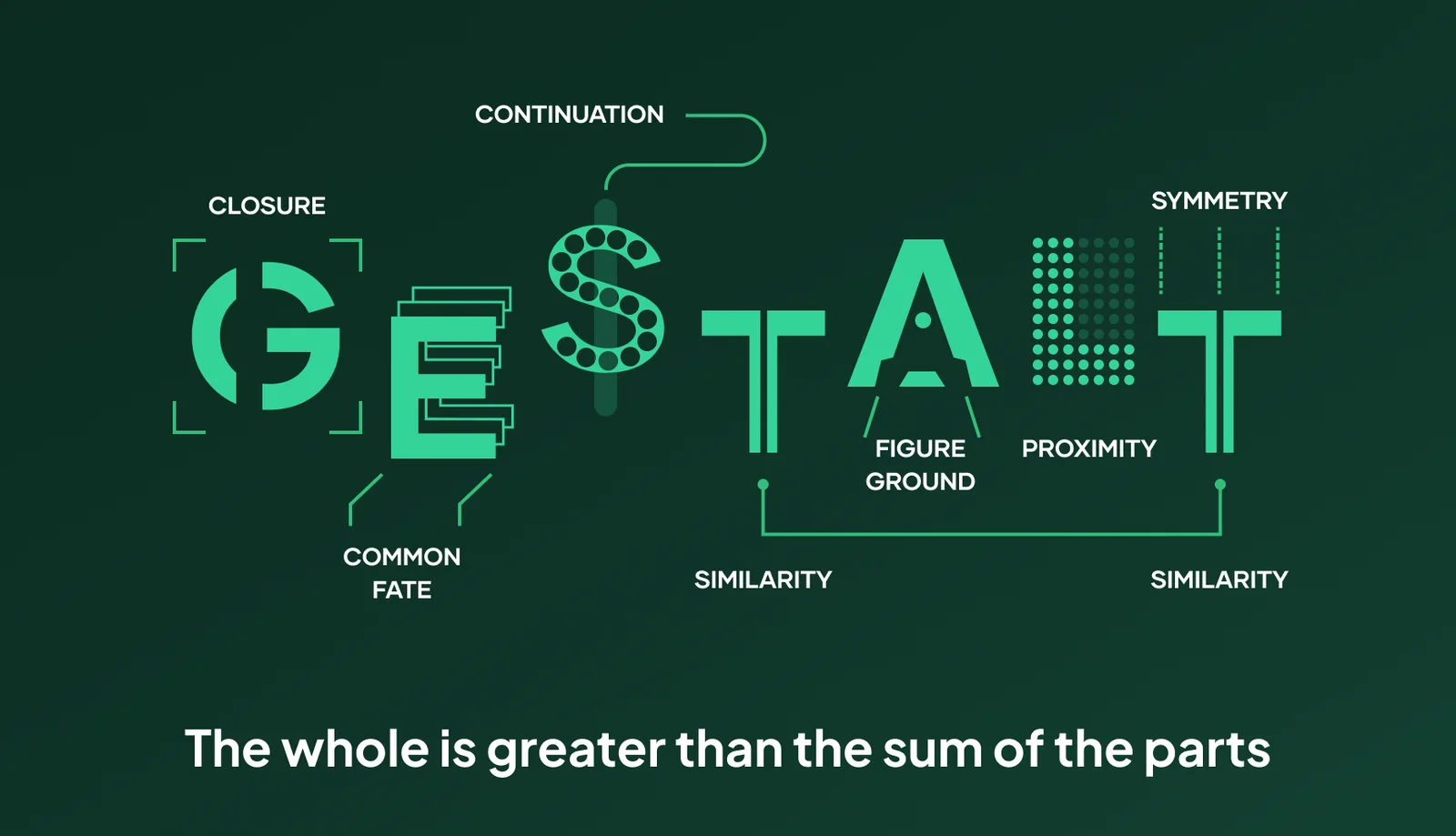
Gestalt — The whole is greater than the sum of the parts. Original image: Toptal.com
Why is it Important in Product Design?
Gestalt Psychology plays a pivotal role in product design by providing a framework for creating designs that resonate cleanly with users. Designers can use principles like visual hierarchy, proximity, and closure to guide user perception, enhance usability, and deliver a delightful experience. Consider the principle of closure, where the brain fills in missing parts to create a whole — a powerful tool in logo design and UI interfaces, fostering user engagement.
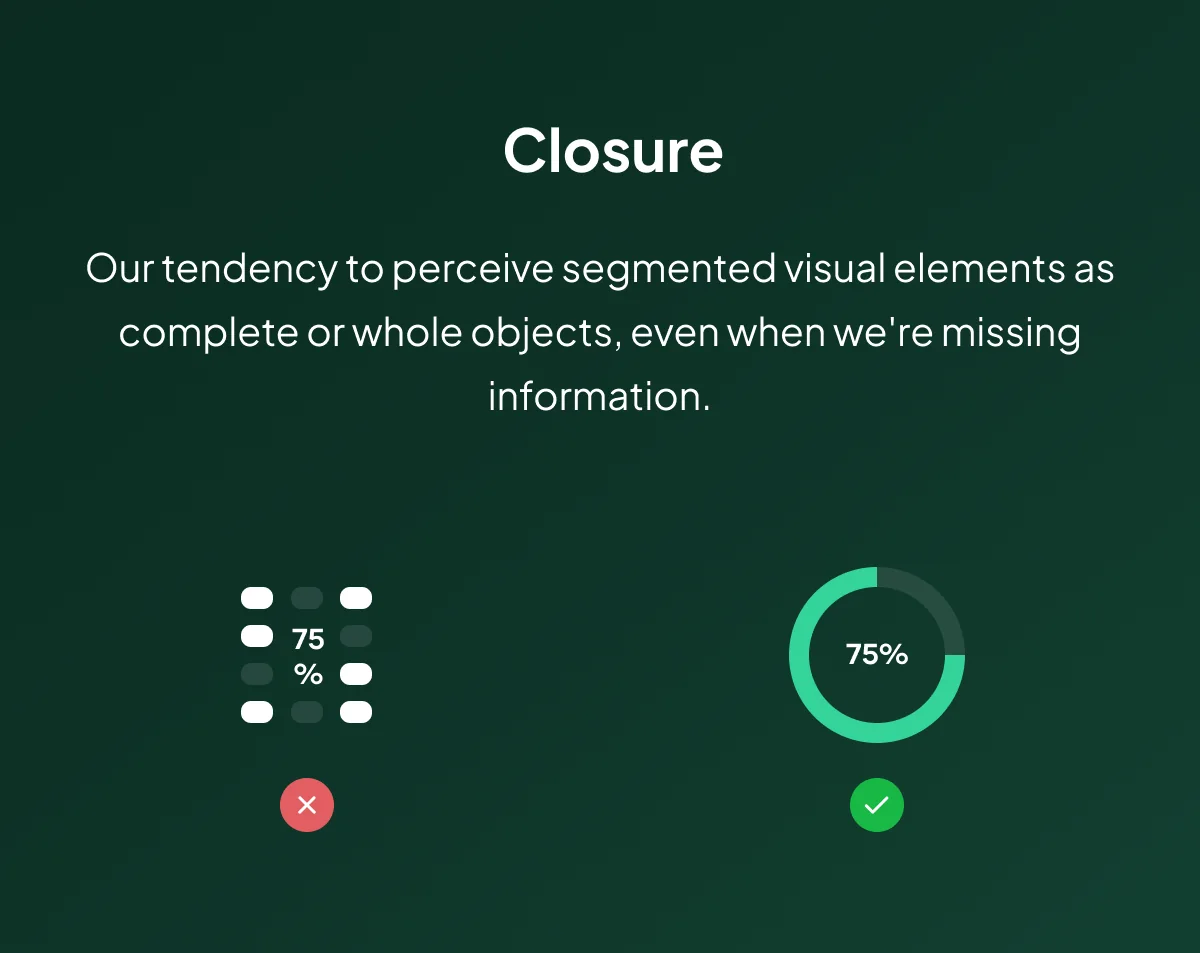
Closure — Gestalt Principle in UI Design
Extra Thoughts
Gestalt principles extend beyond design, influencing fields like psychology, education, and marketing. The enduring relevance lies in their ability to explain the human mind’s innate tendency to seek patterns and make sense of the world. These principles remain foundational as we evolve, adapting to contemporary design challenges.
Takeaways
- Whole-image perception: Gestalt principles encourage designers to consider the overall perception of a design, emphasizing how elements interact to form a unified whole.
- Prioritizing Elements: Visual hierarchy, a Gestalt principle, aids in prioritizing design elements based on importance, ensuring users focus on key information first.
- Utilizing Negative Space: The figure-ground relationship matters, akin to negative space. Clever use, as seen in the FedEx logo’s hidden arrow, adds depth and meaning.
- Grouping for Coherence: Proximity and similarity principles help group related elements, enhancing clarity and coherence in communication.
- Guiding Focus through Perceived Motion: The common fate principle, though added later, is vital in modern design, especially with animated effects. Elements implying shared motion are perceived as a single stimulus, directing user attention effectively.
Examples of Use
Netflix
Applying visual hierarchy, Netflix strategically organizes content, ensuring users easily spot related shows and movies. This enhances user engagement and satisfaction.

Netflix & Proximity (Gestalt Psychology)
Apple
Apple’s user interfaces prioritize simplicity and order, aligning with Gestalt principles. The clean design and intuitive layouts provide an experience that stays out of the way.
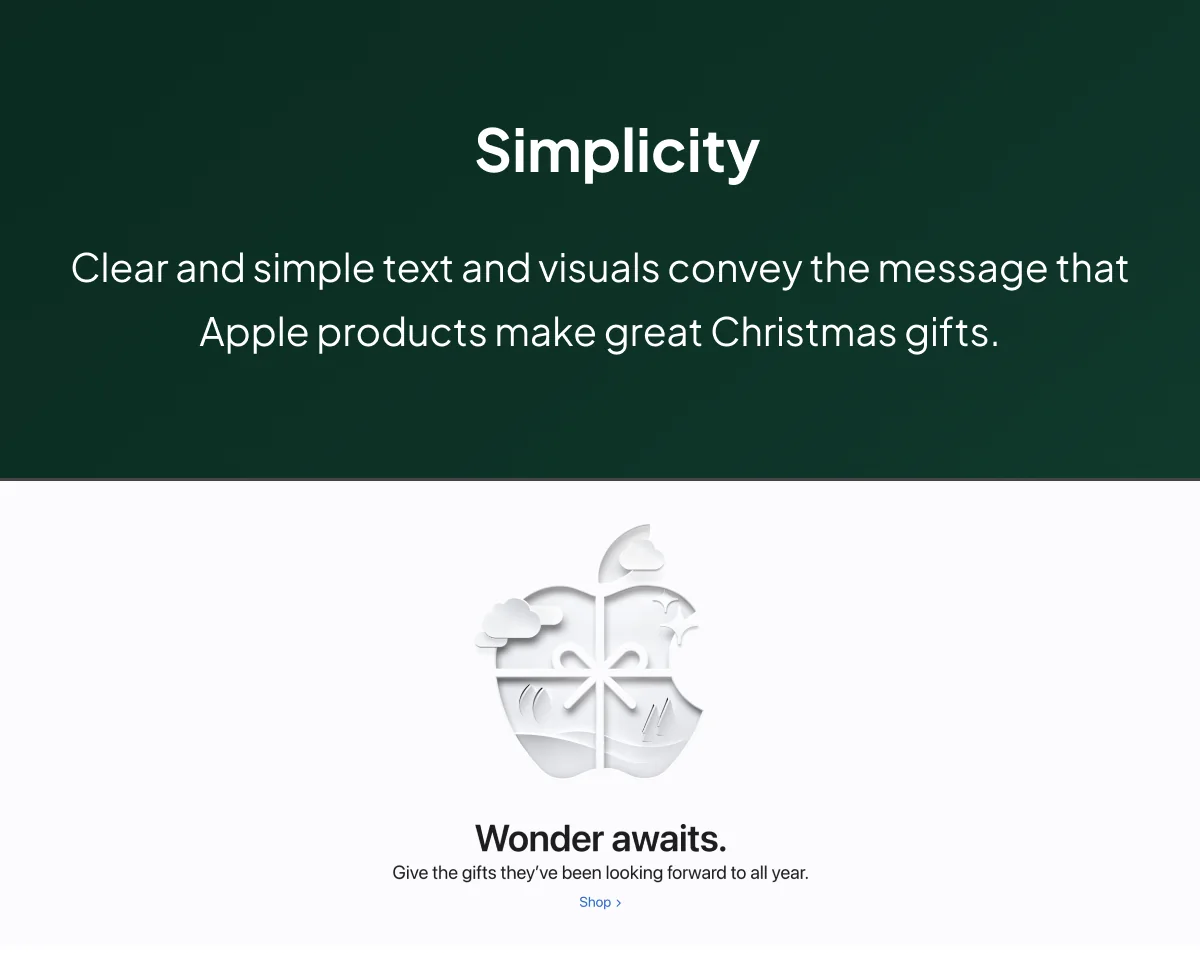
Simplicity on Apple’s Website
Amazon
Proximity is effectively employed on Amazon’s product pages, grouping similar items together. This aids users in making quick comparisons and informed purchase decisions.
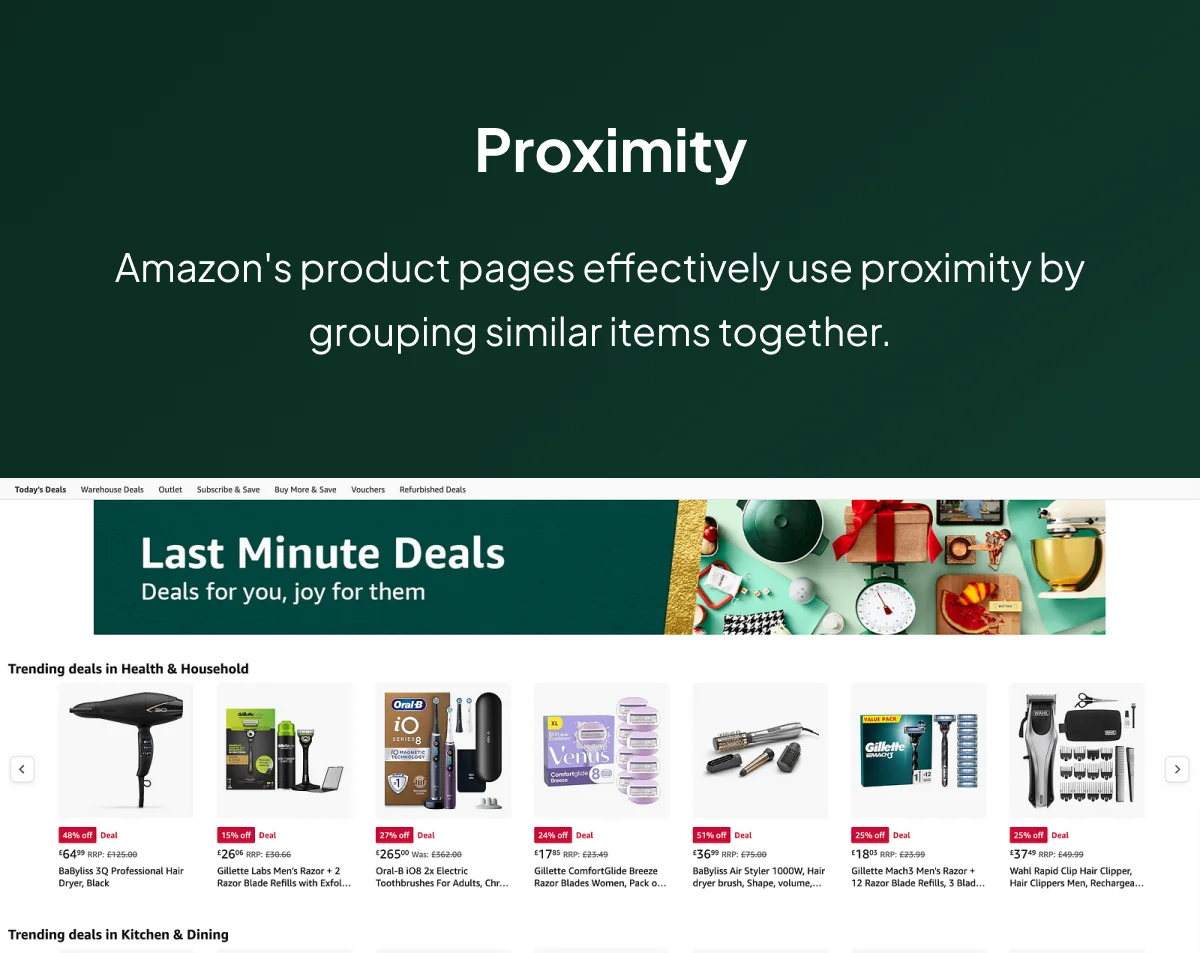
Proximity on Amazon’s website
Google Maps
Continuation is utilized in Google Maps, guiding users along smooth paths and ensuring a smooth navigation experience. The app’s interface promotes effortless exploration.
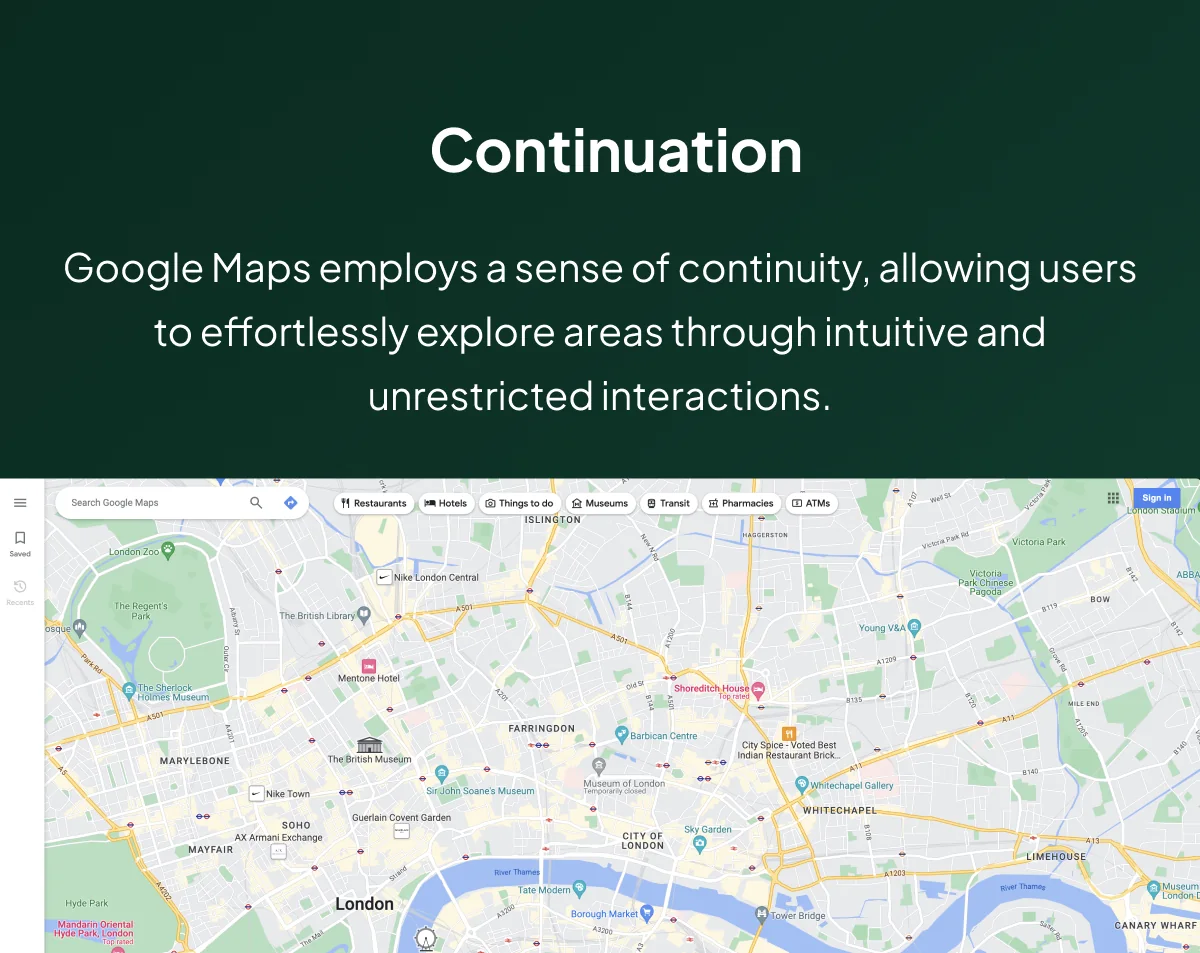
Continuation on Google Maps
Airbnb
The use of the figure-ground relationship is evident in Airbnb’s interface, emphasizing key details against negative space. This enhances user focus and clarity, facilitating easy booking processes.
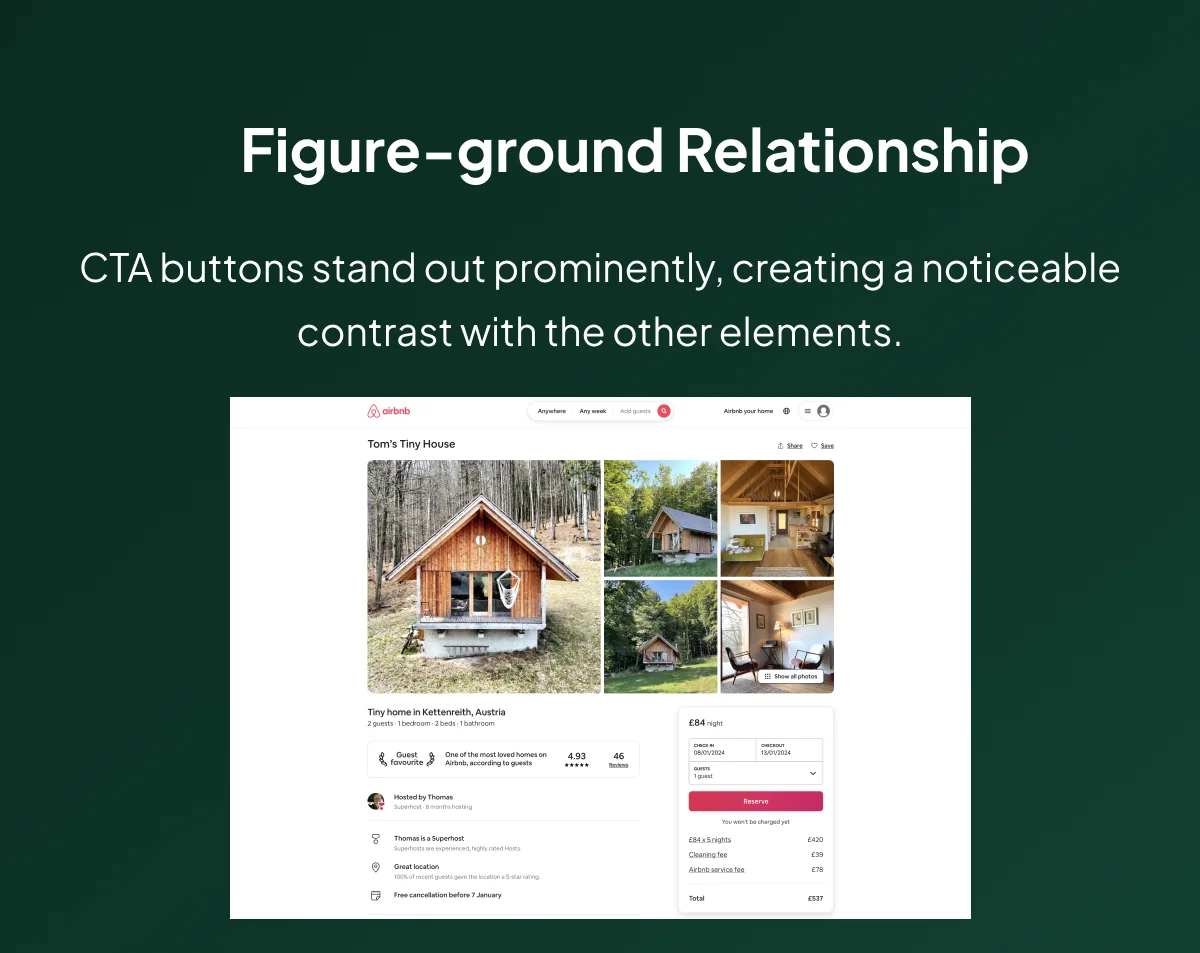
Figure-ground relationship on Airbnb’s website
Conclusion
Gestalt Psychology, with its deep insights into human perception, is a cornerstone of effective design. Its application goes beyond aesthetics, influencing user engagement, brand recognition, and the clean integration of form and function. As designers navigate the evolving landscape, the principles of Gestalt Psychology still hold up, ensuring designs resonate with the innate tendencies of the human mind.
Feel free to reach out for more assistance in incorporating Gestalt principles into your user experience and interface designs.I work with teams on decisions like this one.
Stay connected here and on my LinkedIn profile for additional insights and updates.
If you're weighing a decision like this on a live product, here's how I work with teams.
Part of the UX laws worth knowing — seventeen principles grouped by the decision each one helps you make.
Common questions
What is Gestalt psychology?
A framework developed in the early 20th century describing how the mind organises visual information into wholes rather than perceiving each element separately. The principles include proximity, similarity, closure, continuity and figure-ground.
Why does Gestalt psychology matter in product design?
It explains why some layouts are understood instantly and others have to be worked out. The principles describe what the eye is doing before conscious attention arrives, which is where most of an interface's clarity is won or lost.
Which Gestalt principle matters most in interfaces?
Proximity and similarity carry the most weight day to day, because grouping and differentiation are what most layout decisions actually come down to.