Product vs Project Manager - What's the Difference?
One owns what and why. The other owns how and when.

whats-the-difference" draft: false
Understanding the distinctions between these roles is paramount for business owners seeking to optimize their operations and drive successful outcomes. Let’s look at the nuanced differences between Product and Project Managers, exploring their unique responsibilities, goals, and how their collaboration can enhance overall business performance.
Product Manager: Crafting the Vision for Success
Strategic Vision and Value Creation
Product Managers are the architects of a product’s success. Their primary goal is to maximize return on investment by driving the strategic vision of a product. Unlike the finite nature of projects, products have a lifecycle and are continuously developed to meet evolving market needs.
Customer-Centric Responsibilities
Product Managers are at the forefront of customer satisfaction. They gather and prioritize customer requirements, manage product strategy, and collaborate with cross-functional teams, including product marketing, sales, and customer support. Their focus extends beyond project completion; they stay engaged in product development, ensuring ongoing success.
Continuous Improvement and Flexibility
In the dynamic landscape of product management, adaptability is critical. Product Managers navigate day-to-day activities, respond to user feedback, and iterate on the product roadmap. Their responsibilities include problem-solving, conflict resolution, and the ability to manage sudden changes — vital skills in an agile environment.
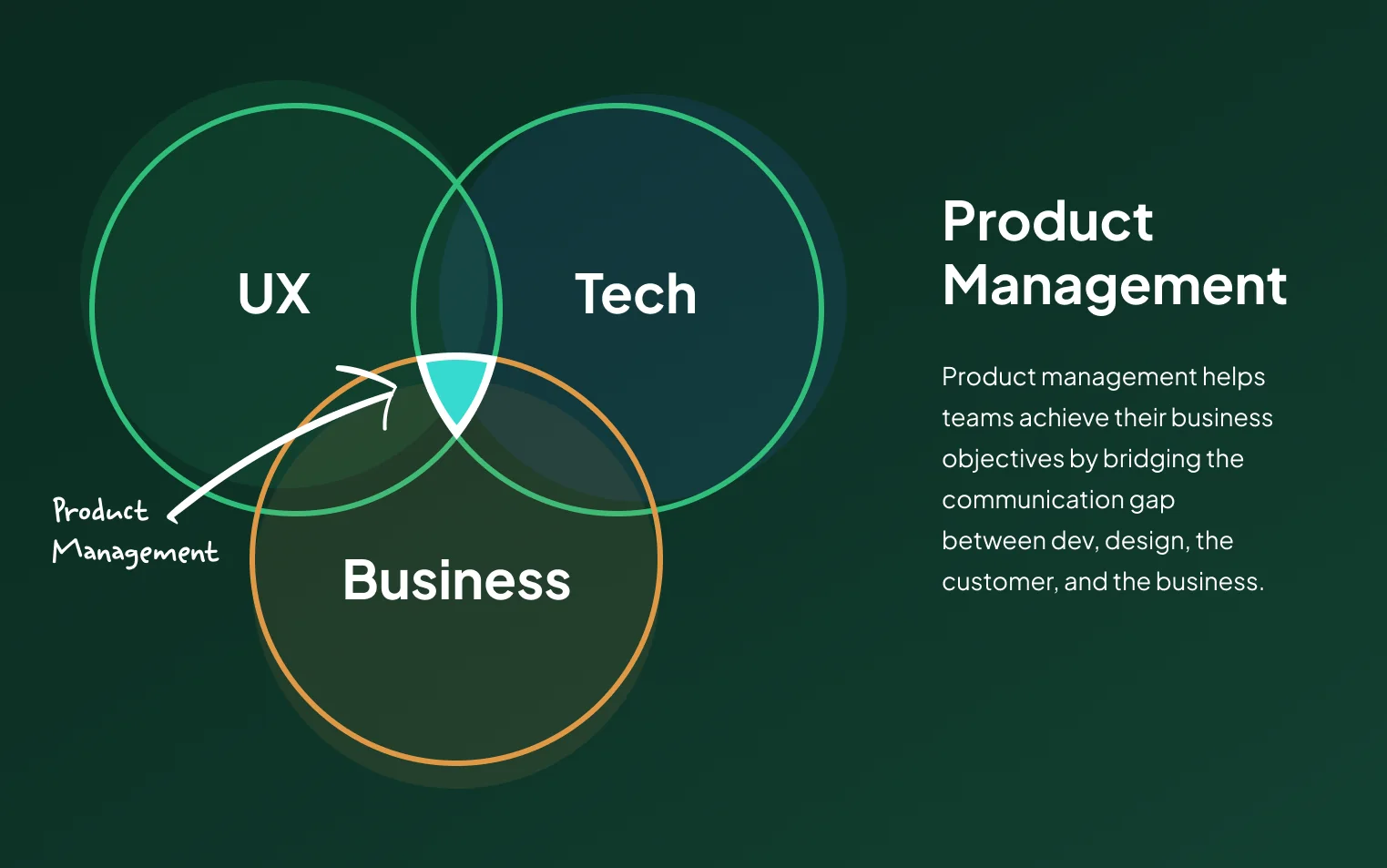
Product Manager - Definition
Project Manager: Ensuring Timely and Efficient Delivery
Risk Mitigation and Resource Management
Project Managers, on the other hand, are champions of efficient project delivery. They aim to minimize downside risk by ensuring initiatives are completed on scope, time, and budget. Through meticulous risk and issue management, resource coordination, and scope limitation, Project Managers keep projects on track.
Defined Project Scope and Temporary Endeavors
Projects have a clear start and end date, with predefined scopes and deliverables. Project Managers organize and prioritize tasks within the defined project scope, ensuring each team member knows their responsibilities well in advance. Once a project is complete, Project Managers move on to the next challenge.
Authority Over Project Teams
Unlike Product Managers, Project Managers hold direct authority over project teams. They manage recruitment, budgeting, task organization, and assignment. This authority enables Project Managers to make critical decisions to ensure project success.
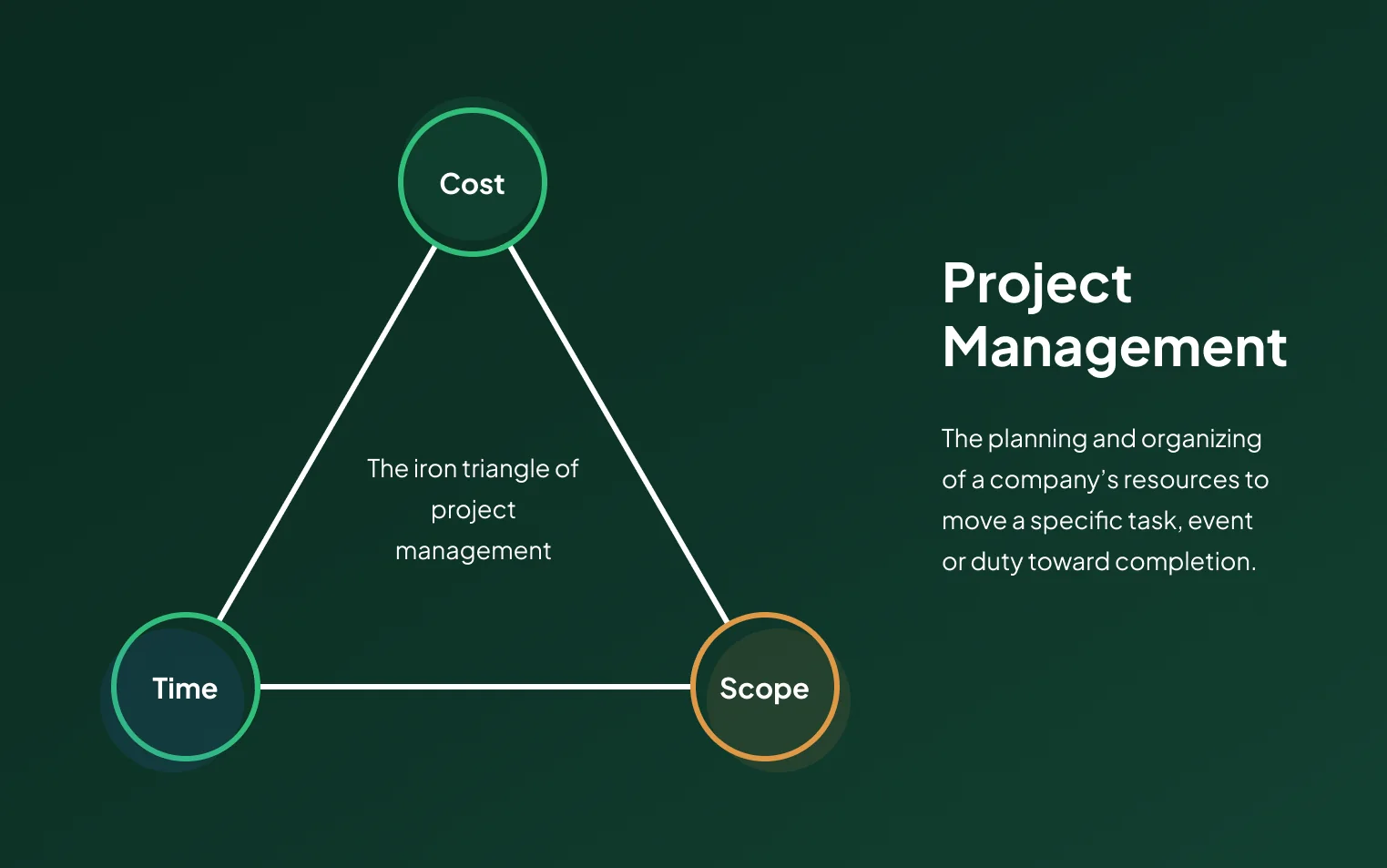
Project Manager - Definition
Collaboration for Business Excellence
Complementary Skill Sets
While Product and Project Managers share some skill sets, the distinctions in their focus make them complementary rather than interchangeable. Both roles require problem-solving, leadership, and the ability to navigate agile environments, but the emphasis differs based on their objectives.
Decoupling for Optimal Performance
In many organizations, especially smaller ones, the lines between Product and Project Managers can blur. However, optimal performance often involves having dedicated professionals in each role. Product Managers focus on external needs and understanding customer requirements, while Project Managers concentrate on internal completion and delivery.
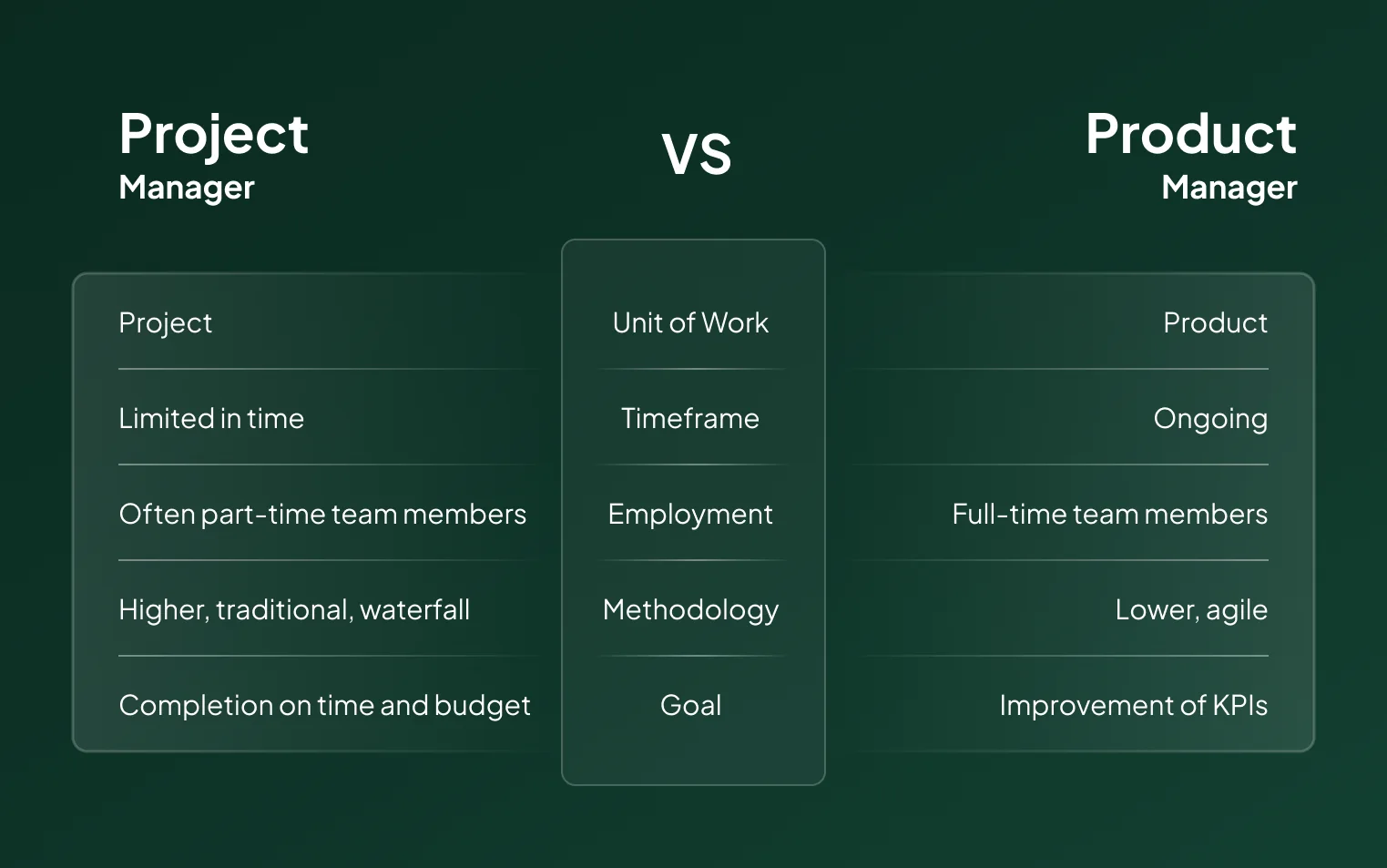
Product Manager vs Project Manager
The Bottom Line for Business Owners
As businesses increasingly shift towards frequent and more minor releases, the collaboration between Product and Project Management becomes key. While Product Managers drive product development and innovation, Project Managers ensure the successful execution of these initiatives.
For business owners, recognizing the unique contributions of Product and Project Managers is instrumental in building a robust framework for success. When these roles are aligned, with each contributing its specialized expertise, businesses can navigate the complexities of product development and project execution cleanly.
Working in the Future of Your Business
For business owners seeking to navigate the complex landscape of product development and project execution, recognizing the unique contributions of Product and Project Managers is instrumental. When harnessed effectively, these roles form a powerful fit that propels organizations toward their strategic objectives.
Product Design Consultancy at Olively
Connect with Us for Expert Guidance
Contact us for further guidance on optimizing product development strategies or streamlining project execution. I work with teams on decisions like this one.
Stay Informed and Inspired
For more insights and updates on business strategies, product management, and project execution, follow me here and on my personal LinkedIn page. Together, let’s navigate the future of your business with informed decisions and strategic excellence.
Where AI has moved the line
The split between the two roles has shifted since AI arrived in roadmaps, and it has shifted unevenly.
Project management absorbed the easier half. Status collection, summarising, chasing dependencies, drafting updates — all of it now has decent tooling, and the coordination load per project has genuinely dropped.
Product management got harder in the same period, because AI features fail in ways ordinary features don't. A checkout button either works or it doesn't. A model gives a plausible wrong answer, confidently, to a fraction of users, and nobody notices for a month. Deciding what an acceptable error rate looks like, who reviews the output, and what happens when it's wrong is a product judgement, and it can't be delegated to the model.
The practical consequence: on AI work, the question "who owns this?" gets sharper, not looser. Someone has to be accountable for whether the thing should exist, what it's allowed to get wrong, and when to switch it off. That's a product decision, and on teams where nobody holds it, AI work tends to stall between a working demo and anything reaching users.
If you're weighing a decision like this on a live product, here's how I work with teams.
Common questions
What is the difference between a product manager and a project manager?
A product manager owns what gets built and why. A project manager owns how and when it lands. The roles overlap in the middle and are not substitutes at the edges.
Do you need both?
Once delivery is complex enough that coordination is a full job, yes. Before that, one person carrying both is common and works, provided they know which hat they are wearing.
Has AI changed the boundary?
It has moved it. More of the delivery coordination is automatable, and more of the product decision is about whether a capability should exist at all.
Integrating an AI platform into enterprise ITSM — the difference between owning what gets built and owning how it lands.