How to Increase Your Digital Startup's Performance (By Using the Right Management Framework) - Part 2
Part two: putting it into practice without stalling.

Scaling Agility for Startups
As digital startups evolve and grow, their challenges become more intricate. In Part 1, we explored the foundational strategies of using Agile frameworks like Scrum and the Scaled Agile Framework (SAFe) for startups. Now, let’s look at advanced frameworks designed to address the demands of scaling operations, managing larger teams, and sustaining high performance.
Large-Scale Scrum (LeSS)
Large-Scale Scrum (LeSS) offers a compelling solution for startups looking to apply Scrum principles at scale. LeSS retains the core principles of Scrum but adapts them to multiple teams working on a single product. By emphasizing simplicity and minimizing unnecessary processes, LeSS aims to keep agility intact while enabling collaboration among numerous teams. This framework is particularly beneficial for startups anticipating significant growth and expansion.
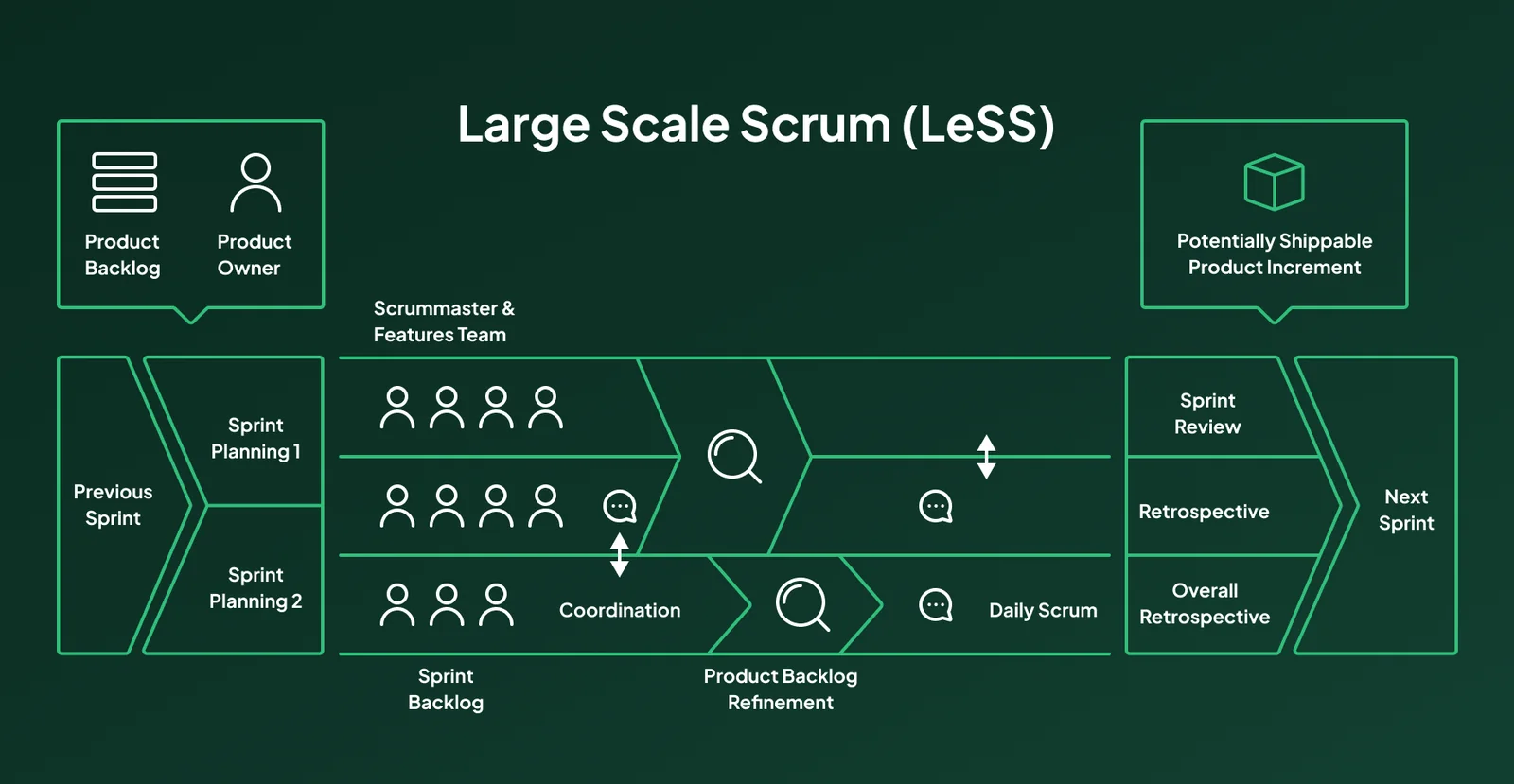
Large-Scale Scrum (LeSS). Original image: Toptal.com
Scrum@Scale
Building on the fundamentals of Scrum, Scrum@Scale efficiently coordinates multiple Scrum teams. This framework introduces the concept of Scrum of Scrums (SoS), where representatives from individual teams collaborate to ensure alignment and address dependencies. Scrum@Scale provides a flexible approach to scaling, allowing startups to tailor the framework based on their specific needs. It’s a pragmatic choice for large enterprises with diverse teams and complex projects.
Nexus
Nexus provides a lightweight scaling framework that doesn’t burden startups with excessive roles or processes. It promotes collaboration by establishing a central integration team that aligns the work of various teams toward a common goal. Nexus aligns well with Scrum principles, making it an accessible choice for startups proficient in Scrum and seeking a straightforward approach to scale their operations.
Disciplined Agile (DA)
Recognizing that every startup is unique, Disciplined Agile (DA) is a flexible and context-driven framework. Acting more like a toolbox than a strict methodology, DA allows startups to choose the scaling strategies that suit their specific context. It spans the entire delivery life cycle and introduces a variety of roles to accommodate the diverse needs of different teams within an organization.
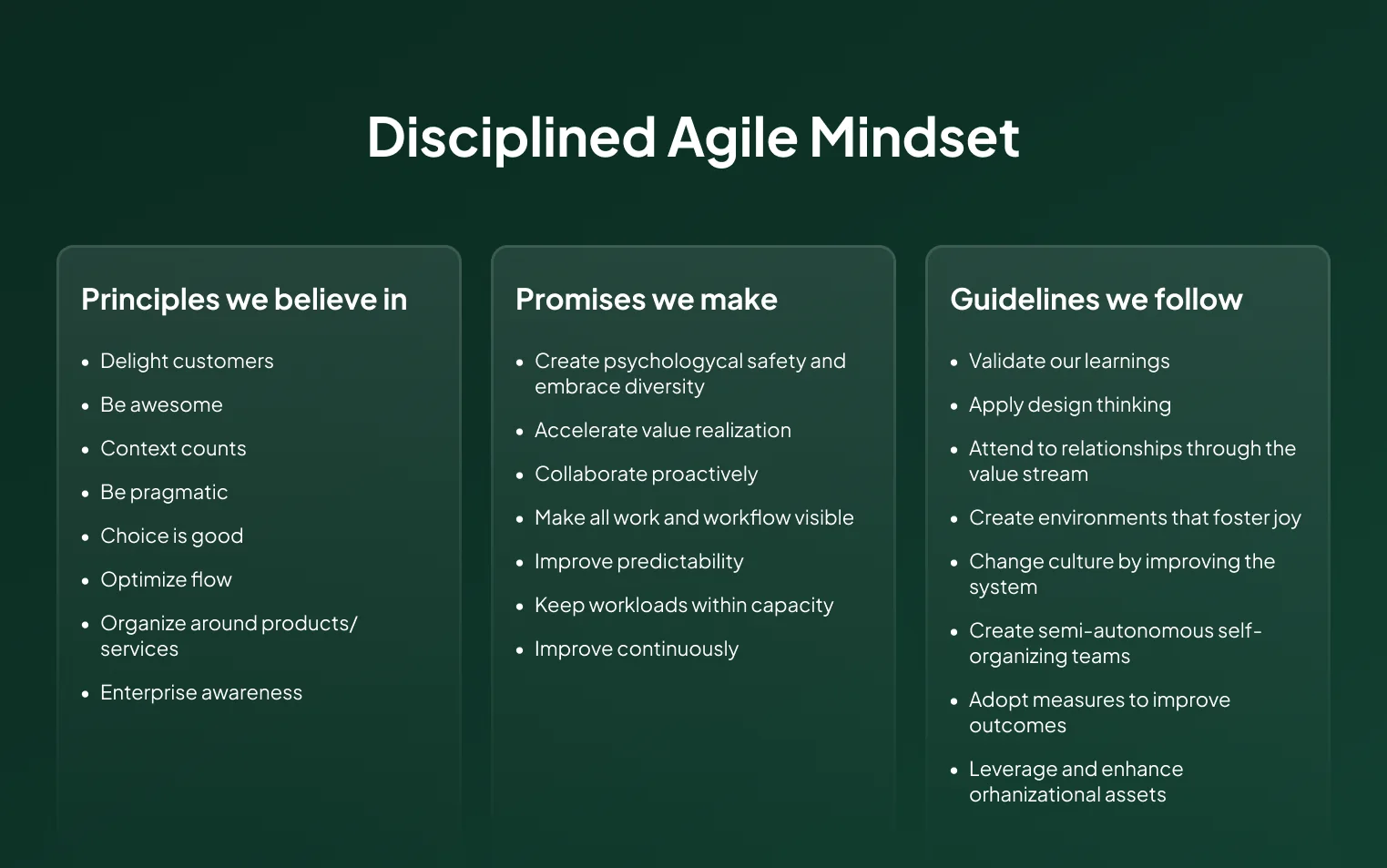
Disciplined Agile (DA)
Strategic Decision-Making
In the quest to increase your digital startup’s performance, choosing a management framework becomes a strategic decision. Evaluating factors like the organization’s size, financial resources, and proficiency in Agile methodologies is essential. Startups should consider the inherent characteristics of each framework and select one that aligns cleanly with their current operations while providing room for future growth.
Conclusion
Working in the dynamic landscape of digital startups demands a keen understanding of management frameworks that can propel performance and innovation. By combining the foundational principles of Agile with scalable frameworks like LeSS, Scrum@Scale, Nexus, and Disciplined Agile, startups can chart a course for sustained growth, efficient collaboration, and a continuous focus on delivering value to their customers.
Product Design Consultancy at Olively
Connect with Us
Feel free to contact us if you need further guidance on selecting the right management framework for your startup’s unique needs. I work with teams on decisions like this one.
For more insights and updates, follow me here and on my personal LinkedIn page.
If you're weighing a decision like this on a live product, here's how I work with teams.
Common questions
How do you scale a framework as the team grows?
By adding only the parts that solve a problem you are currently having. LeSS, Nexus and Disciplined Agile all assume a scale of coordination that a smaller team does not have.
How do you tell whether a framework is working?
The first months should show fewer things in flight and clearer ownership. If the visible change is more meetings, the framework has been adopted rather than fitted.
Turning a per-client survey into one framework — the moment a repeated request should become a product.