Occam's Razor in Product Design
The simplest thing that solves the problem usually wins.
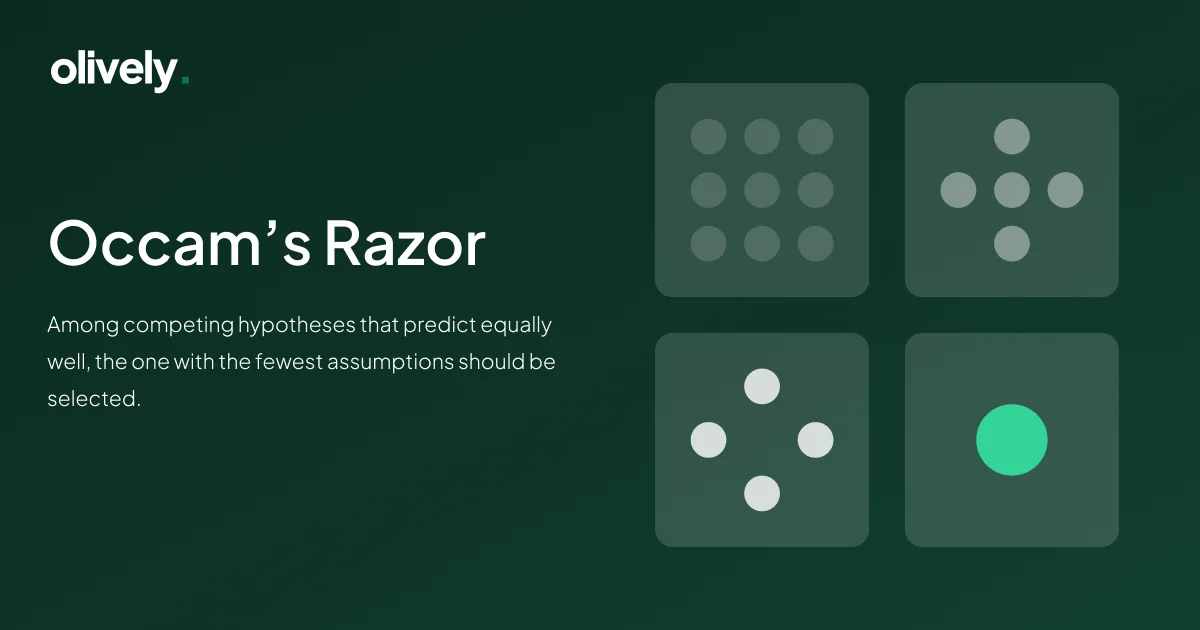
Attributed to the medieval philosopher William of Ockham, this razor-sharp concept slices through complexity, leaving behind the elegant residue of clarity and efficiency.
Occam’s Razor in a Nutshell
Occam’s Razor, rooted in the Latin phrase “lex parsimoniae” or “law of parsimony,” urges that among competing hypotheses predicting equally well, the one with the fewest assumptions should be selected. This durable principle emphasizes the elegance of simplicity, suggesting that the simplest solution is often the best.
Simplicity in Design
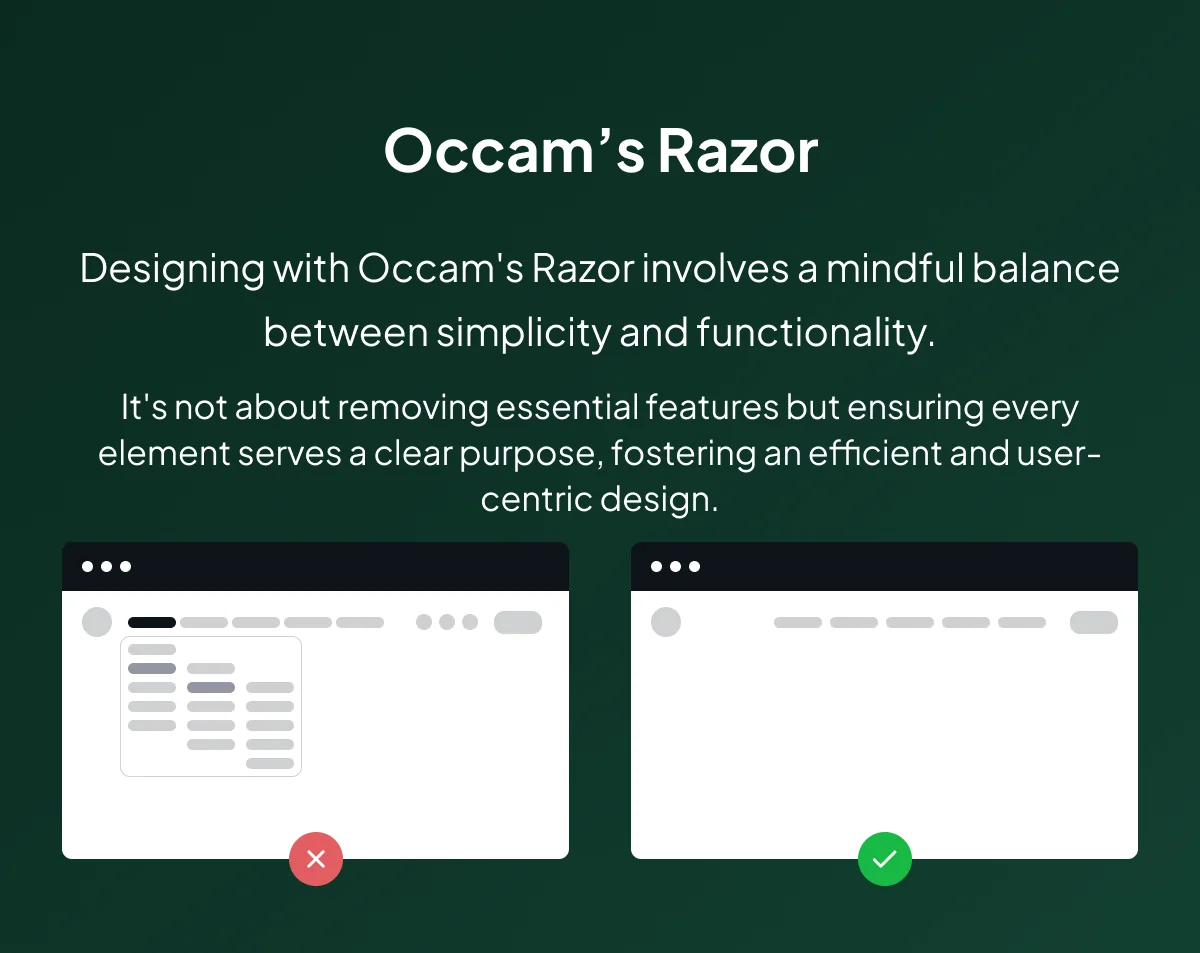
The application of Occam’s Razor in product design holds deep significance. It champions the idea that simplicity enhances the user experience. Analyzing each design element, removing unnecessary components without compromising functionality, and considering completion only when nothing more can be eliminated become pivotal steps in crafting effective designs.
Occam’s Razor — Example
Extra Thoughts
Designing with Occam’s Razor involves a mindful balance between simplicity and functionality. It’s not about removing essential features but ensuring every element serves a clear purpose, fostering an efficient and user-centric design. This delicate dance between simplicity and functionality requires a deep understanding of user needs and a commitment to refining designs to their essential components.
Key Takeaways
1. Simplicity Enhances UX
Occam’s Razor underscores that simplicity isn’t a compromise but an enhancement. Striving for simplicity in design ensures a more intuitive and enjoyable user experience. When users can navigate a product effortlessly and understand its purpose without unnecessary complexities, overall satisfaction and usability increase.
2. Clear Messaging Matters
Effective communication lies at the heart of user experience. Occam’s Razor emphasizes the importance of clear and concise messaging. By eliminating unnecessary jargon and providing straightforward instructions, designers ensure that users comprehend and interact with products cleanly.
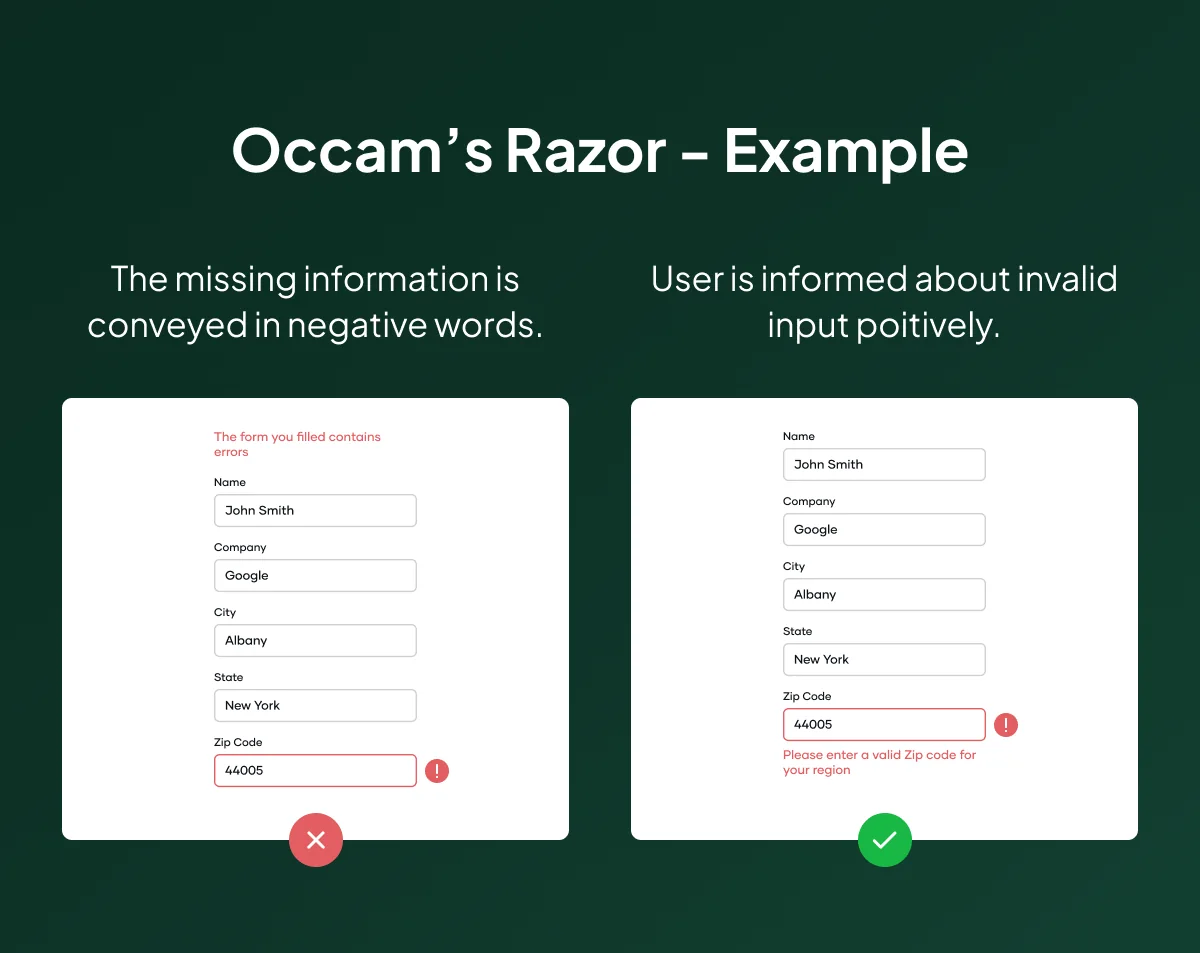
Clear Messaging Example
3. Streamlined Forms Increase Completion
Online forms are critical to many digital experiences. Applying Occam’s Razor to form design means keeping things simple and concise. Designers can reduce friction and increase completion rates by minimizing the number of fields, pre-filling information when possible, and providing helpful input validation.
4. Visual Minimalism Enhances Focus
The concept of Occam’s Razor extends beyond navigation and into visual design. A cluttered and overwhelming interface can confuse and frustrate users. By embracing minimalist design principles, UX designers can focus on essential elements, eliminating unnecessary visual noise. This approach is evident in the iconic product designs of companies like Apple, where a minimalist approach creates an elegant and user-friendly experience.

Product Page on Rains.com — Minimalism Example
5. Reduced Cognitive Load Improves Usability
Occam’s Razor advises designers to minimize the cognitive load on users by eliminating unnecessary complexities. This can be achieved through thoughtful organization, clear hierarchy, and intuitive interaction patterns. By using familiar icons and standard conventions, designers can tap into users’ existing mental models, reducing the learning curve and enhancing usability.
Examples of Use
Google (Streamlined Navigation)
Google’s clean interface exemplifies Occam’s Razor, simplifying user navigation.

Google — Occam’s Razor Example
Apple (Minimalist Visuals)
From its hardware's sleek design to its intuitive software layout, Apple embodies the principles of Occam’s Razor in creating a smooth and user-friendly environment.
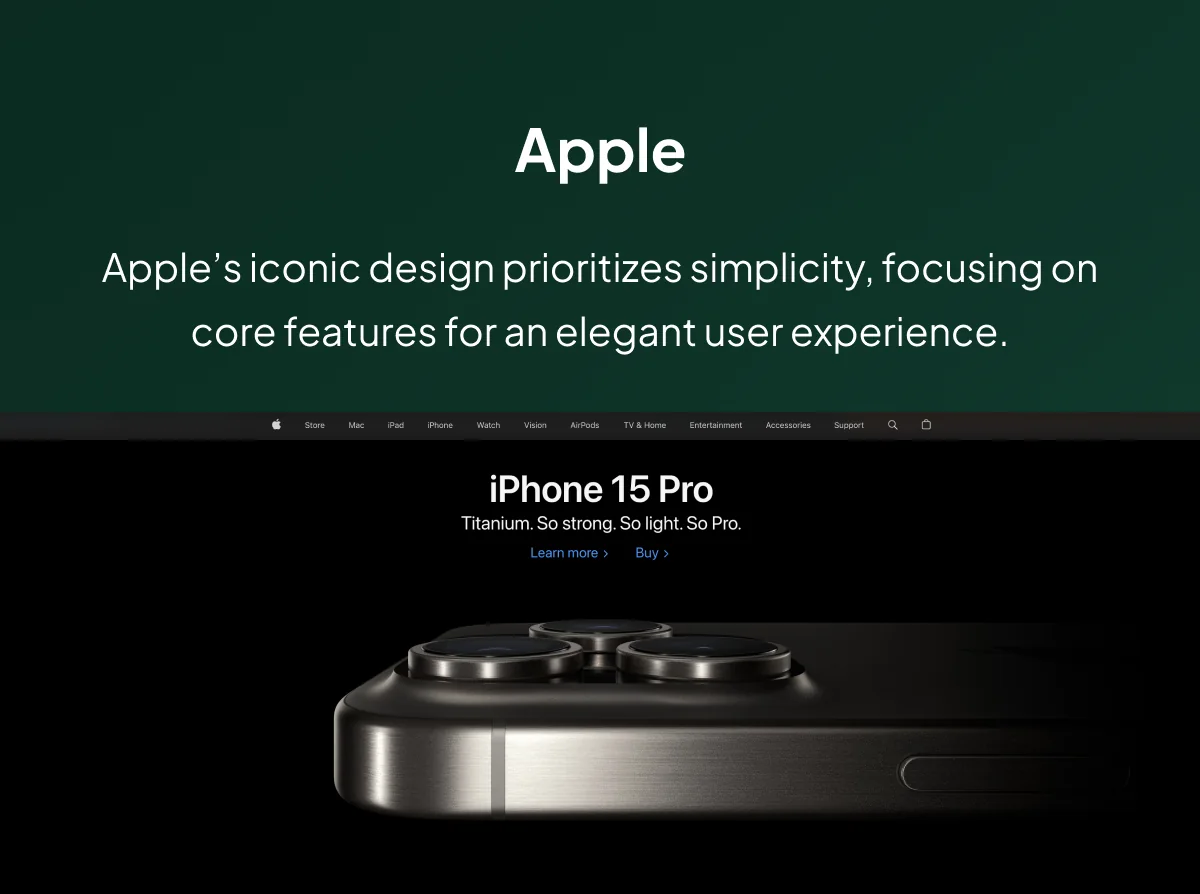
Apple — Occam’s Razor Example
Typeform (Streamlined Forms)
By presenting questions one at a time engagingly, Typeform streamlines the form-filling process, aligning with the principles of Occam’s Razor to enhance user interaction.
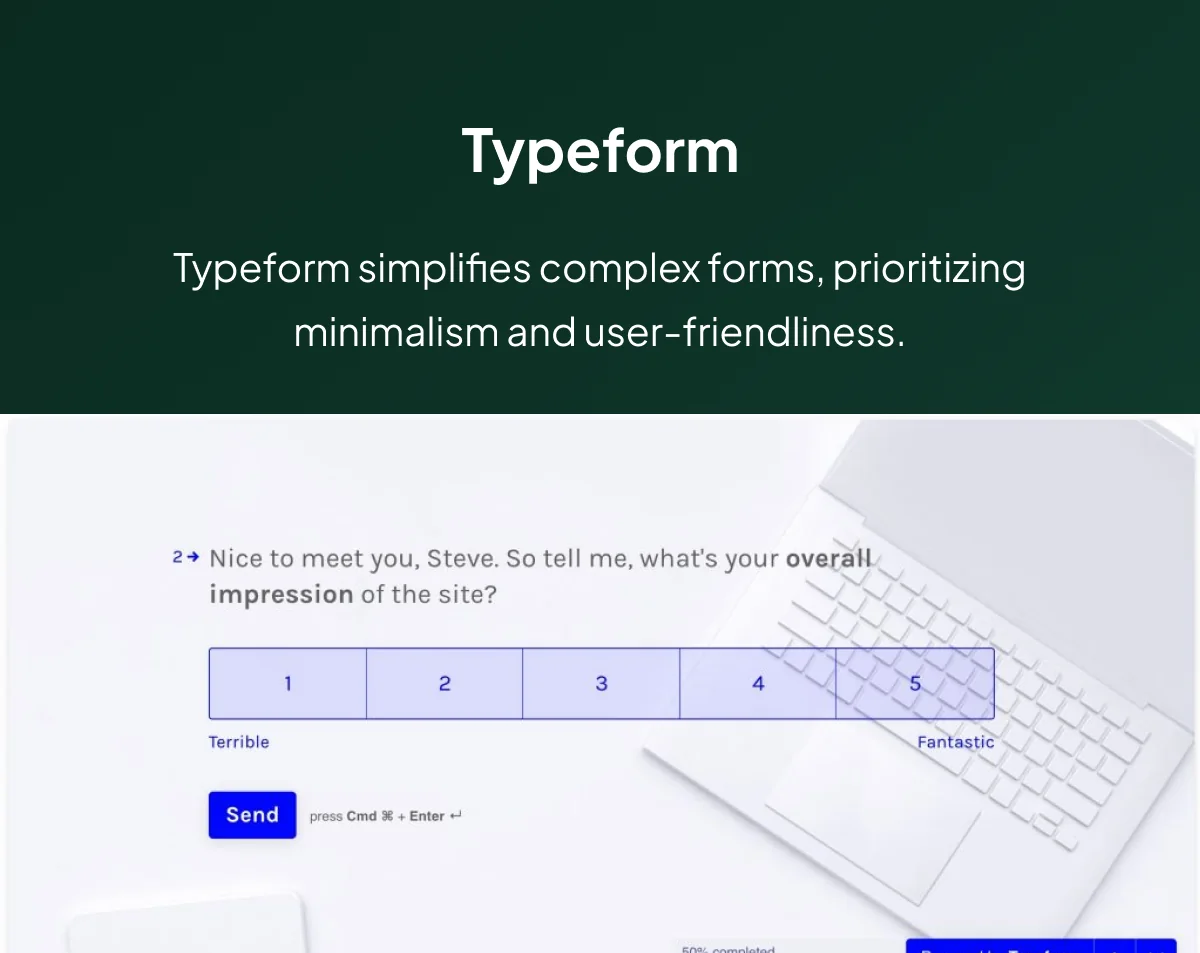
Typeform — Occam’s Razor Example
Occam’s Razor in Business and Marketing
Occam’s Razor is also applicable in business and marketing contexts. Streamlining processes, eliminating unnecessary complexities, and focusing on clear messaging become imperative strategies. By simplifying business strategies, organizations enhance customer understanding, leading to increased engagement and success.
Conclusion
In conclusion, Occam’s Razor, with its roots in medieval philosophy, continues to be a guiding light in the modern world of design and problem-solving. Its call for simplicity resonates across industries, emphasizing that elegance and efficiency lie in the straightforward and uncomplicated. As designers, businesses, and marketers navigate the complexities of their respective fields, the razor’s edge is a durable reminder that, sometimes, the simplest solution is the best.
Product Design Consultancy at Olively
Feel free to reach out if you seek further guidance on incorporating these principles into your design and business strategies. I work with teams on decisions like this one.
Stay connected here and follow me on my personal LinkedIn page for additional insights and updates.
Happy designing!
If you're weighing a decision like this on a live product, here's how I work with teams.
Part of the UX laws worth knowing — seventeen principles grouped by the decision each one helps you make.
Cutting enterprise change requests 15 to 7 minutes — the simplest version that worked, chosen over the complete one that would not have been trusted.
Common questions
What is Occam's Razor in design?
From the Latin lex parsimoniae: among competing options that solve the problem equally well, choose the one making the fewest assumptions. In design, the simplest solution that works is usually the right one.
How do you apply Occam's Razor to a product?
Examine each element and ask what it is for. Remove anything that does not answer. This is not stripping features out — it is making sure everything left has a job.
Can a design be too simple?
Yes. Occam's Razor is a balance between simplicity and functionality, not a licence to remove essential features. The test is whether the product still does what someone came for.