How to Pitch Your Startup to Investors to Get Funded
The deck, the order, and the questions you should expect.

One key milestone in this path is securing funding from investors who believe in your vision. Crafting a compelling pitch captivating investors’ attention is an art and a science. Here’s your guide on pitching your startup effectively and securing the funding to propel your business forward.
1. The Investor Pitch Deck
The cornerstone of a successful startup pitch is the Investor Pitch Deck. This comprehensive presentation serves as your business snapshot, conveying essential information visually, appealing, and concisely. The key components include:
a. Why Get Funding: Clearly articulate why your startup needs funding. Investors want to understand the purpose and potential impact of their Investment.
b. Challenges of Pitching: Acknowledge the hurdles of seeking funding, showcasing your awareness of the competitive landscape and potential roadblocks.
c. Investor Pitch Deck Definition: Define what an investor pitch deck is and emphasize its importance in the fundraising process.
d. Structure and Rules: Outline the structure of a pitch deck and highlight the rules that make it effective. Clarity and adherence to a proven structure enhance your pitch.
e. Best Practices: Share best practices for creating a pitch deck. Insights into successful strategies can set your presentation apart.
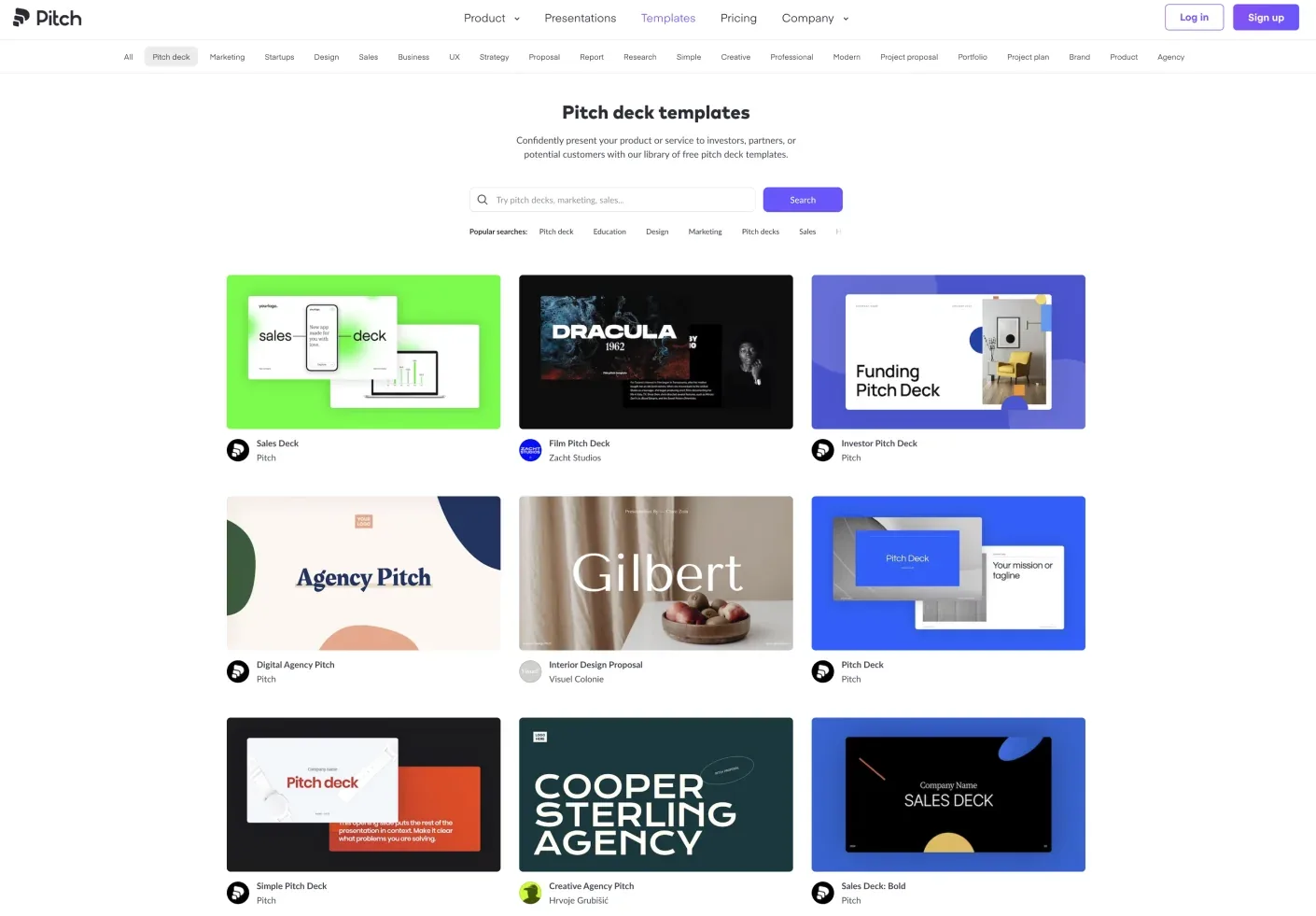
You can edit and use pre-made pitch deck templates on Pitch.com
2. Understanding Your Investors
Before approaching investors, understand the different types — venture capitalists (VCs) and angel investors. Tailor your pitch to resonate with their preferences:
a. Types of Investors: Differentiate between venture capitalists and angel investors based on their investment preferences and risk tolerance.
b. Post-Investment Expectations: Highlight what investors typically seek after investing. Understanding their expectations demonstrates your commitment to a mutually beneficial partnership.
3. Handling Challenges in Pitching
Pitching to investors poses unique challenges, especially for startups seeking seed funding:
a. Overcoming Obscurity: Address the challenge of being a new entrant by presenting a persuasive pitch that distinguishes your startup from the crowd.
b. Managing Investor Expectations: Discuss the heightened expectations of angel investors and how meeting these expectations matters for maintaining a positive investor relationship.

Handling Challenges in Pitching. Original image: Toptal.com
4. Crafting a Winning Pitch
Your pitch should be a compelling narrative that convinces investors to bet on your startup:
a. Problem-Solution Presentation: Present the problem your product or service solves and how your startup provides a unique solution.
b. Team Showcase: Introduce your team as a vital asset. Highlight their expertise and demonstrate why they are well-equipped to lead the startup to success.
c. Business Model and Financial Projections: Articulate your revenue generation strategy and present realistic financial forecasts. Investors want a viable business model and a clear path to profitability.
d. Competitive Edge: Differentiate your product or service from competitors. Showcase what makes your startup stand out in the market.
e. Investment Ask: Clearly state the funding you seek and how you plan to utilize it. Transparency builds trust with investors.
5. Following Pitching Rules
Adhering to specific rules can enhance the effectiveness of your pitch:
a. Clarity and Conciseness: Keep your pitch concise and focused. Avoid information overload, allowing investors to absorb your key points quickly.
b. Visual Aids: Incorporate visual aids to enhance understanding. Visuals can simplify complex information and make your pitch more engaging.
c. Continuous Improvement: The path to securing funding may involve multiple pitches. Learn from each interaction, continuously refining and improving your pitch based on feedback.
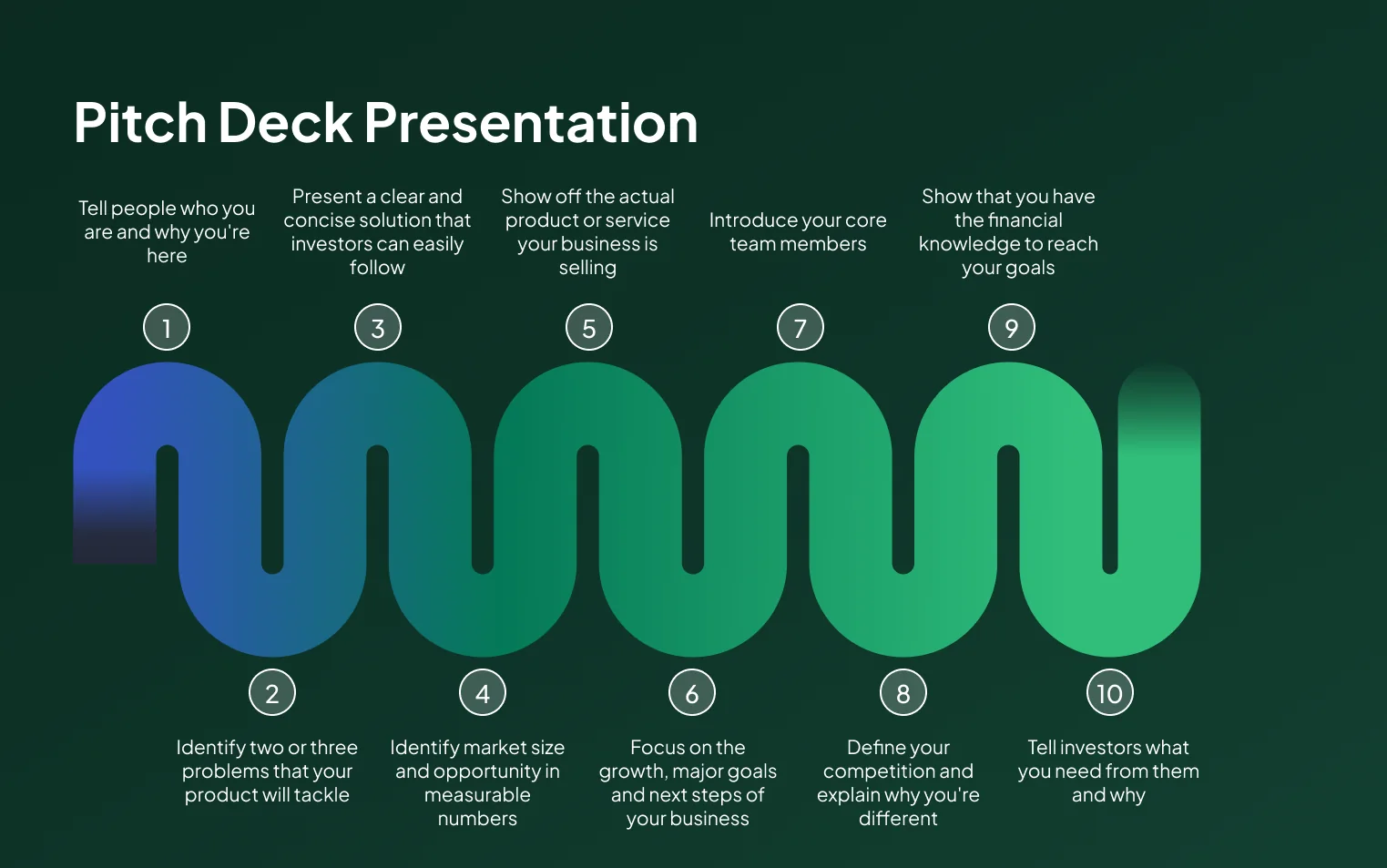
Pitch Deck Presentation Guide
6. Embracing the KISS Principle
Embrace the “Keep It Simple, Stupid” (KISS) principle to ensure simplicity and elegance in your presentations. Starting with the conclusion and then providing supporting details simplifies your message and minimizes potential questions from investors.
7. Perseverance Pays Off
Even the most successful startups faced rejection before achieving greatness. Keep refining your pitch, learn from each experience, and persevere. Every “no” brings you closer to the “yes” that will propel your startup to new heights.
In Conclusion
Crafting a compelling startup pitch is an ongoing process that requires dedication and adaptability. By getting right the art of pitching, understanding your investors, and continuously refining your approach, you’ll increase your chances of securing the funding needed to turn your startup vision into a reality. Remember, each pitch is an opportunity to showcase the potential of your business — make it count.
Product Design Services for Startups at Olively
Feel free to contact us if you need further guidance on perfecting your startup pitch or want strategic insights for your business growth. I work with teams on decisions like this one.
For more insights and updates, follow me here and on my personal LinkedIn page. Your success is our priority, and we look forward to being part of your startup path.
If you're weighing a decision like this on a live product, here's the AI Reality Check.
Common questions
What should be in an investor pitch deck?
Why funding is needed and what it changes, an honest account of the challenges, the market and the traction, the team, and a specific ask with a plan for the money. Transparency on the ask builds more trust than a large number does.
How long should a pitch be?
Short enough that every slide earns its place. Start with the conclusion and support it, rather than building to a reveal — investors are not reading for suspense.
What do investors actually assess?
Whether you understand the problem better than they expected, and whether the plan shows what you will learn next rather than only what you will build.