Archive · Home & commercial service
SaaS CRM Webapp (Dashboards)
TradieFlow handles leads, schedules quote meetings, books jobs and sends invoices from one place.
This is earlier work, kept here because people still find it. The role titles below describe each engagement at the time. Olively today is an AI product consultancy — if that is what you are after, start with the AI Reality Check or the readiness scorecard.
The problem
What the work was actually for.
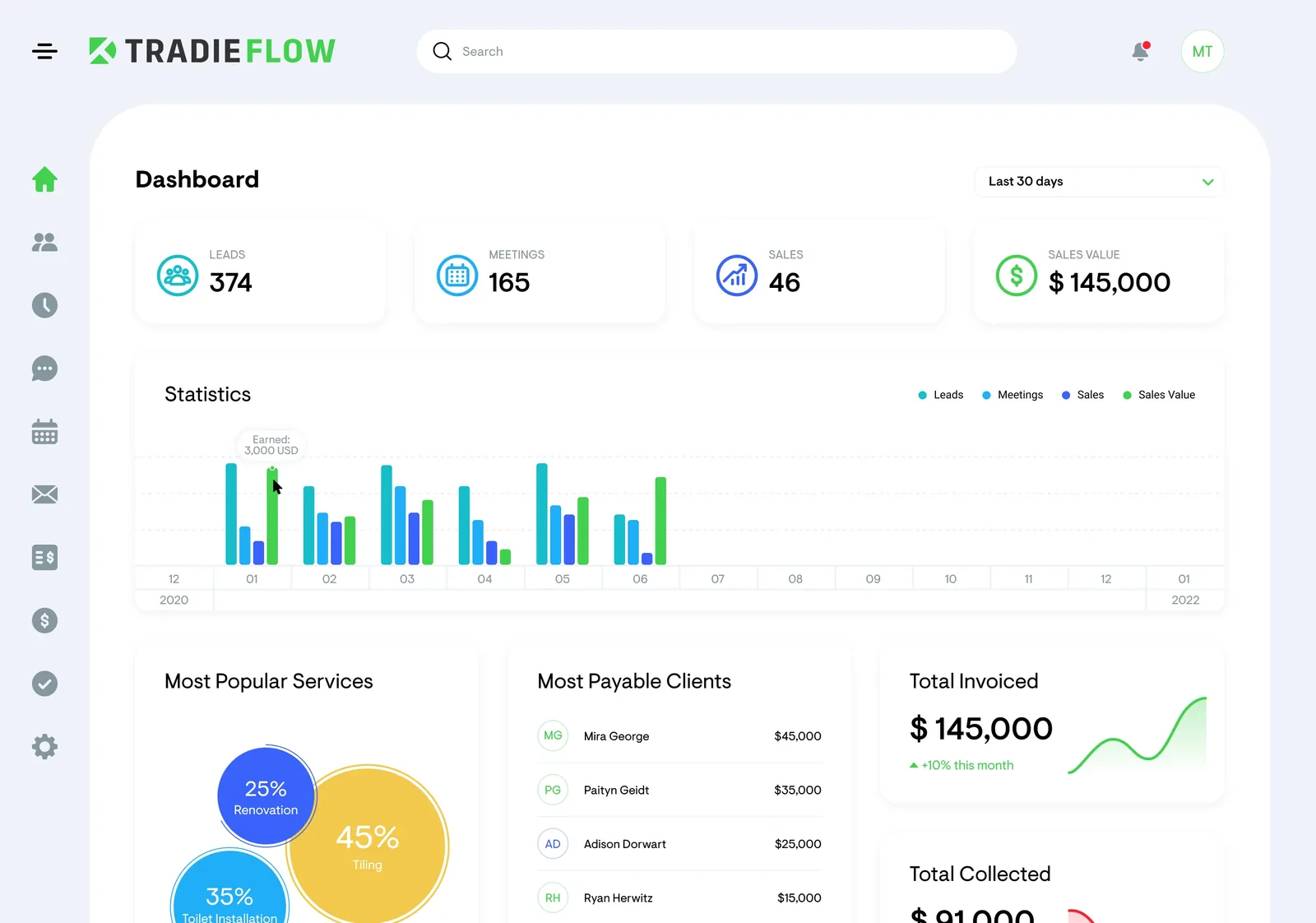
The web side of TradieFlow: over 400 screens covering leads, quotes, jobs, email, invoicing and payments for trade businesses.
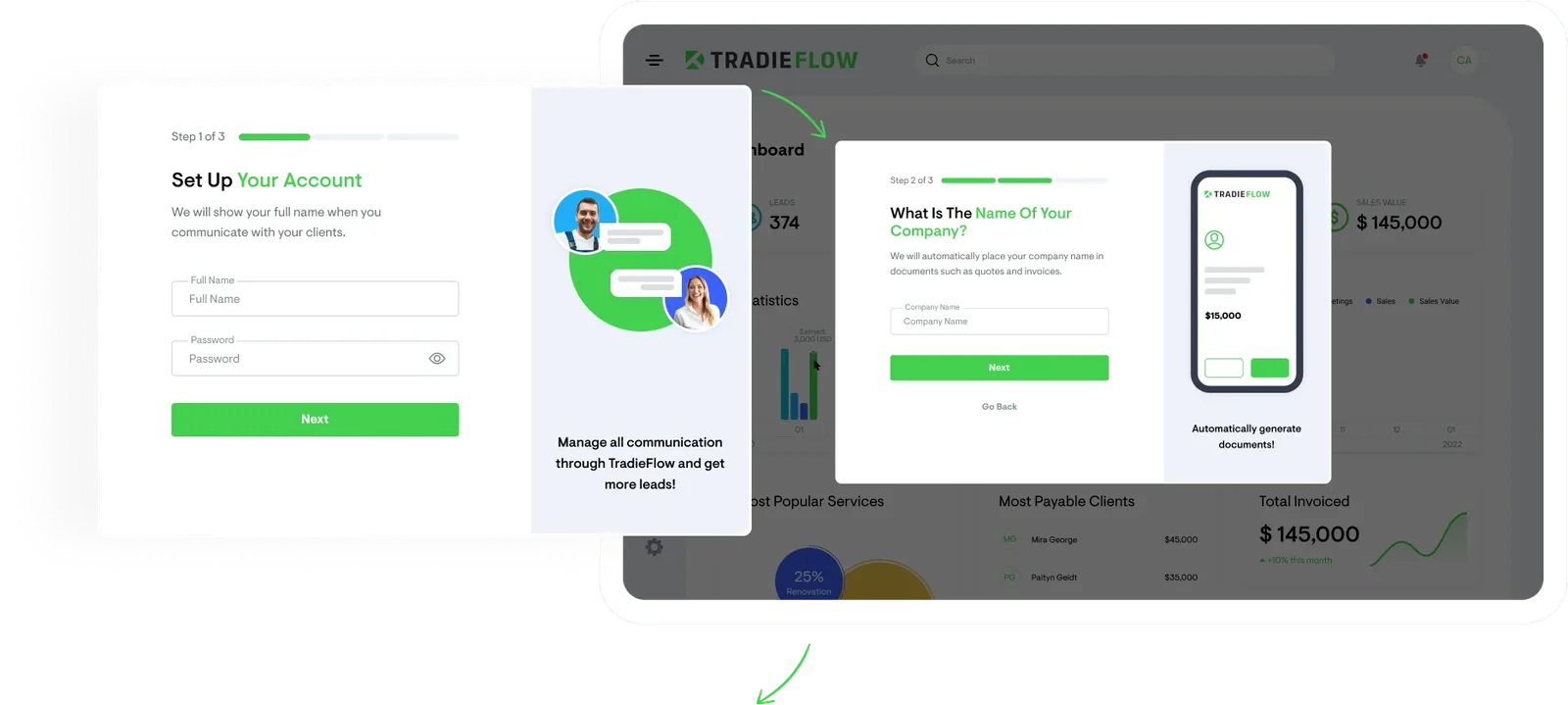
The number worth knowing is the onboarding one. The first concept performed badly in analytics. The replacement raised completed onboarding by 400% — the same product, a different first five minutes.
The outcome
What actually changed.
Completed onboarding rose 400% after the first concept was replaced, and invoices paid 23%. The onboarding number is the one worth pausing on: same product, same features, different first five minutes.
The decisions
Three calls that shaped it.
Rebuild onboarding rather than tune it
The first concept performed badly in analytics. Replacing it outright raised completion by 400% — the largest single result on the project, from the same product with a different first five minutes.
Information architecture per behavioural profile
One structure imposed on everyone would have suited nobody. The platform map was built per profile, because a sole trader and a twelve-person firm do not navigate the same way.
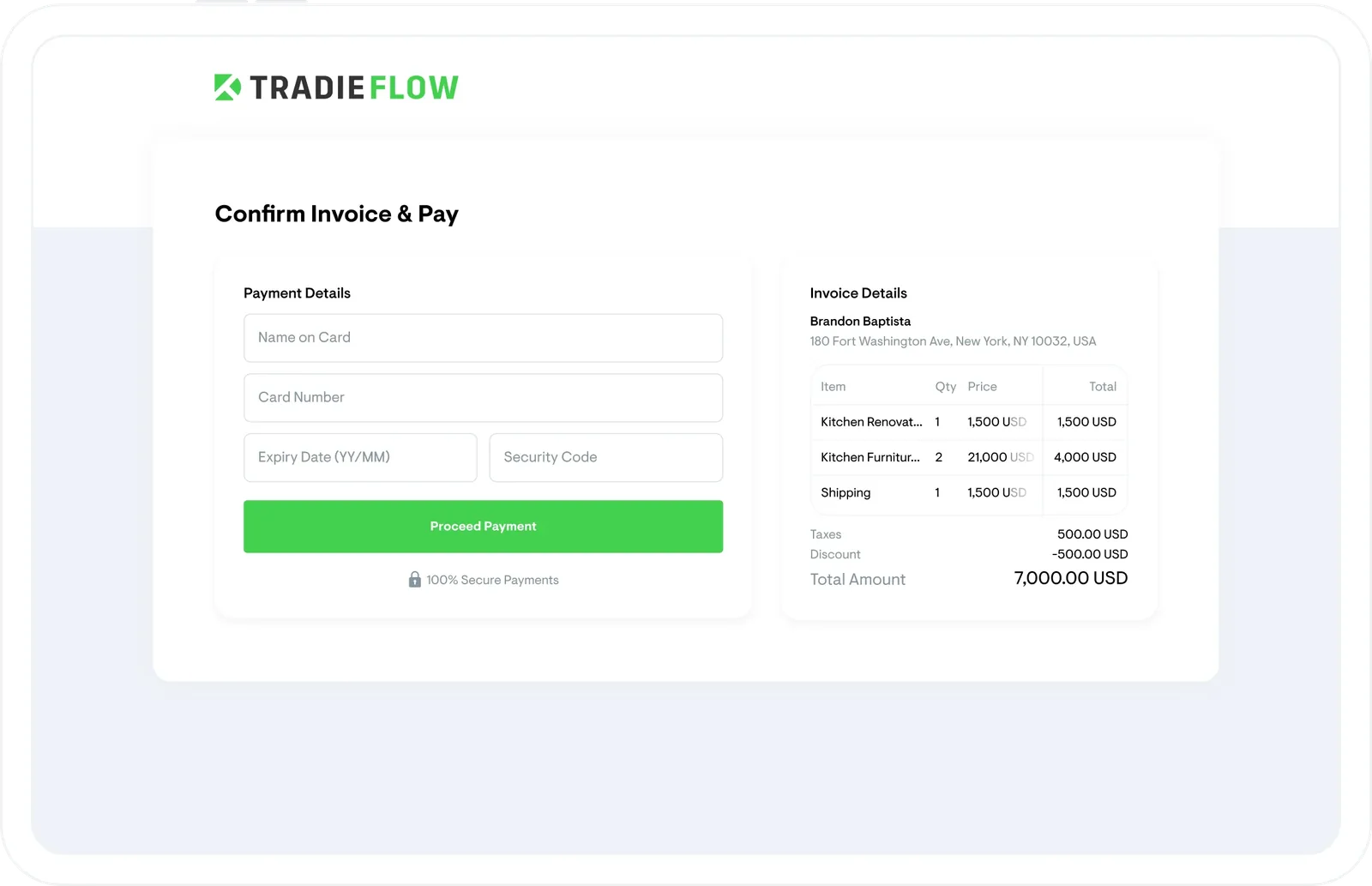
Ten fields for payment setup, not sixty
Stripe’s own verification flow needed around 60 fields. For a tradesperson setting up on a phone between jobs, that is where the sign-up ends. The alternative got it to 10.
What was hard
Over 400 screens is where a design system stops being optional. It was built from scratch during the project rather than assembled as it went, which cost time early and saved more later.
Worth pointing at
A few decisions that held up.
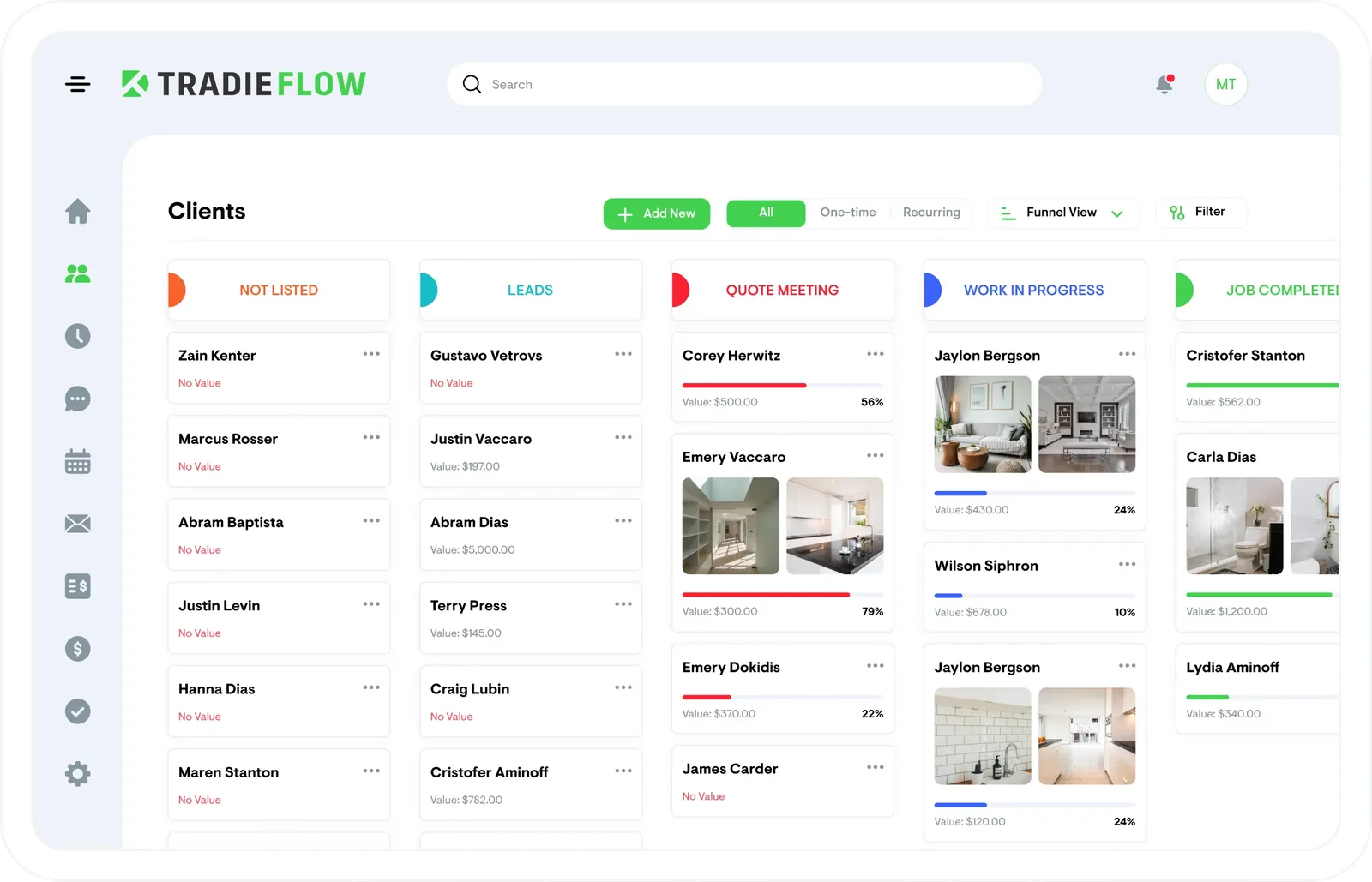
Funnel view
Clients can be seen as a sales funnel and moved by dragging, rather than edited field by field.
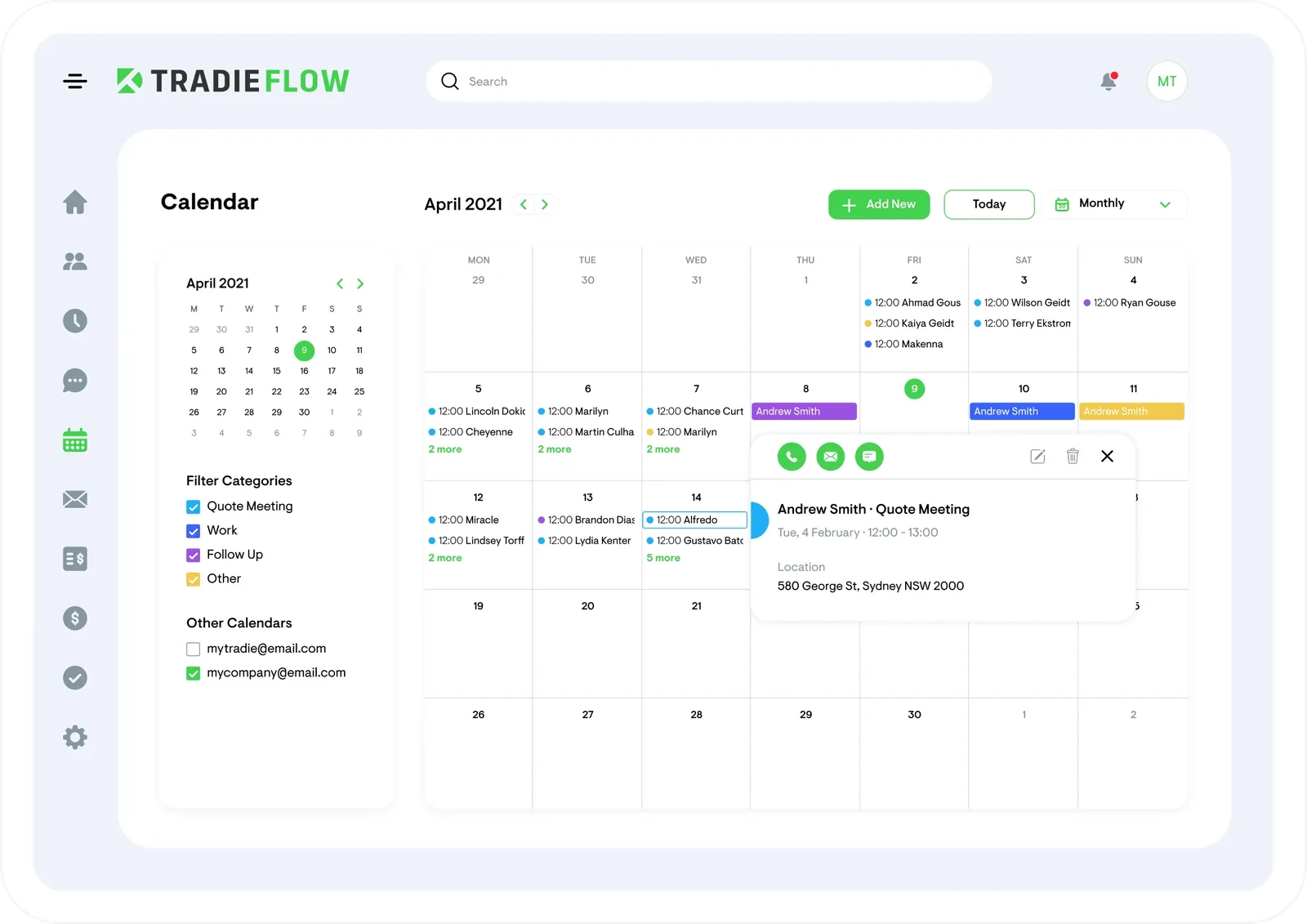
Three calendars
Research showed tradespeople want different views, so daily, weekly and monthly all exist, colour-coded to sales stage.
Email with custom logic
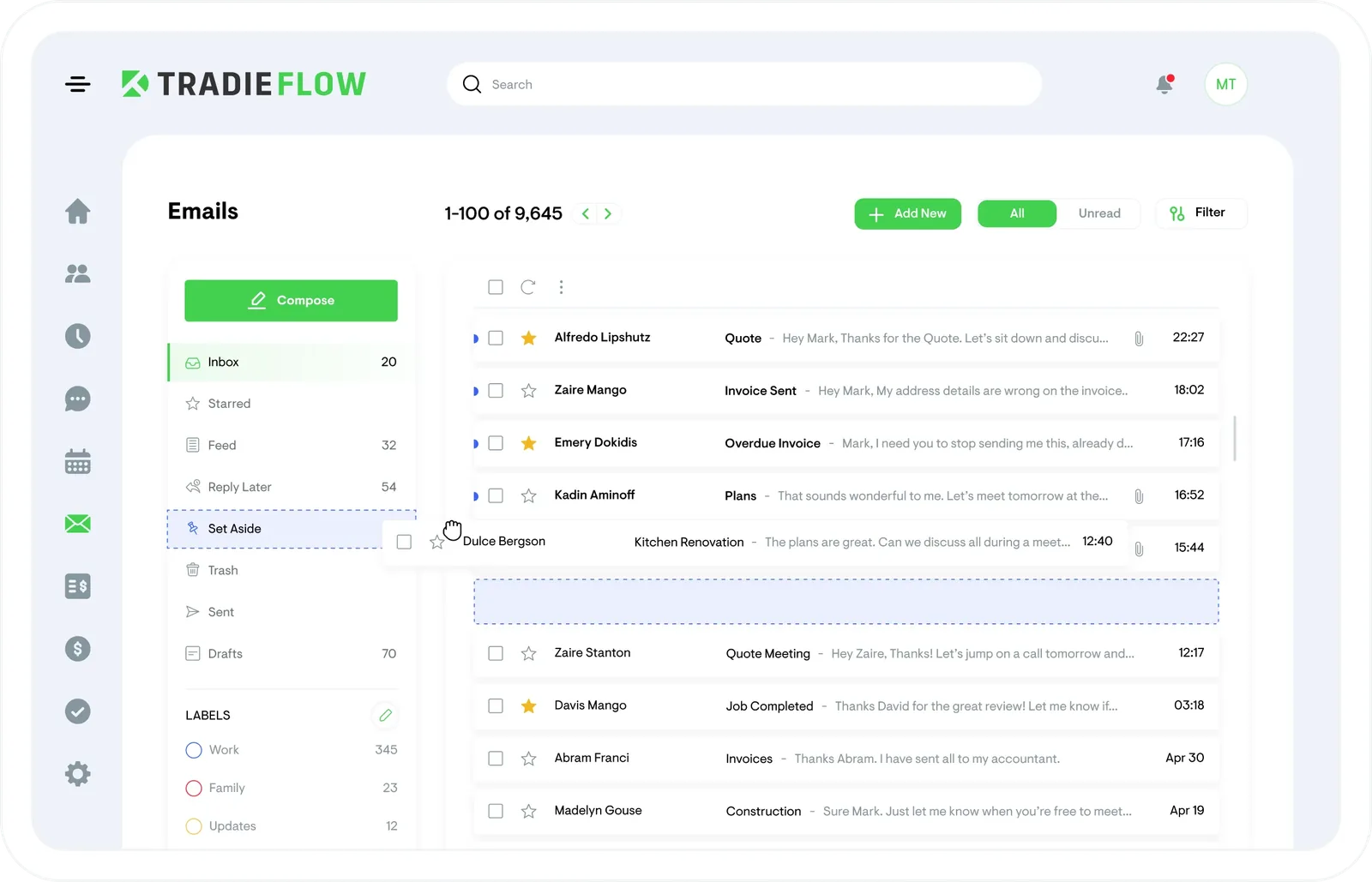
Standard email features plus 'set aside' and 'reply later', so nothing important disappears down the list.
Payments in ten fields
Stripe's flow needed around 60 fields for verification. The alternative got it to 10.
The work
What it looked like.
Onboarding
The first concept performed badly in analytics. The replacement raised completion by 400% — the single largest result on the project.
Clients, funnel view
Clients as a sales funnel, moved by dragging rather than edited field by field.
Calendar
Three views, because research showed tradespeople genuinely want different ones. Colour-coded to sales stage.
Tradespeople triage on site, between jobs. The two extra actions exist so a message can be parked without being lost.
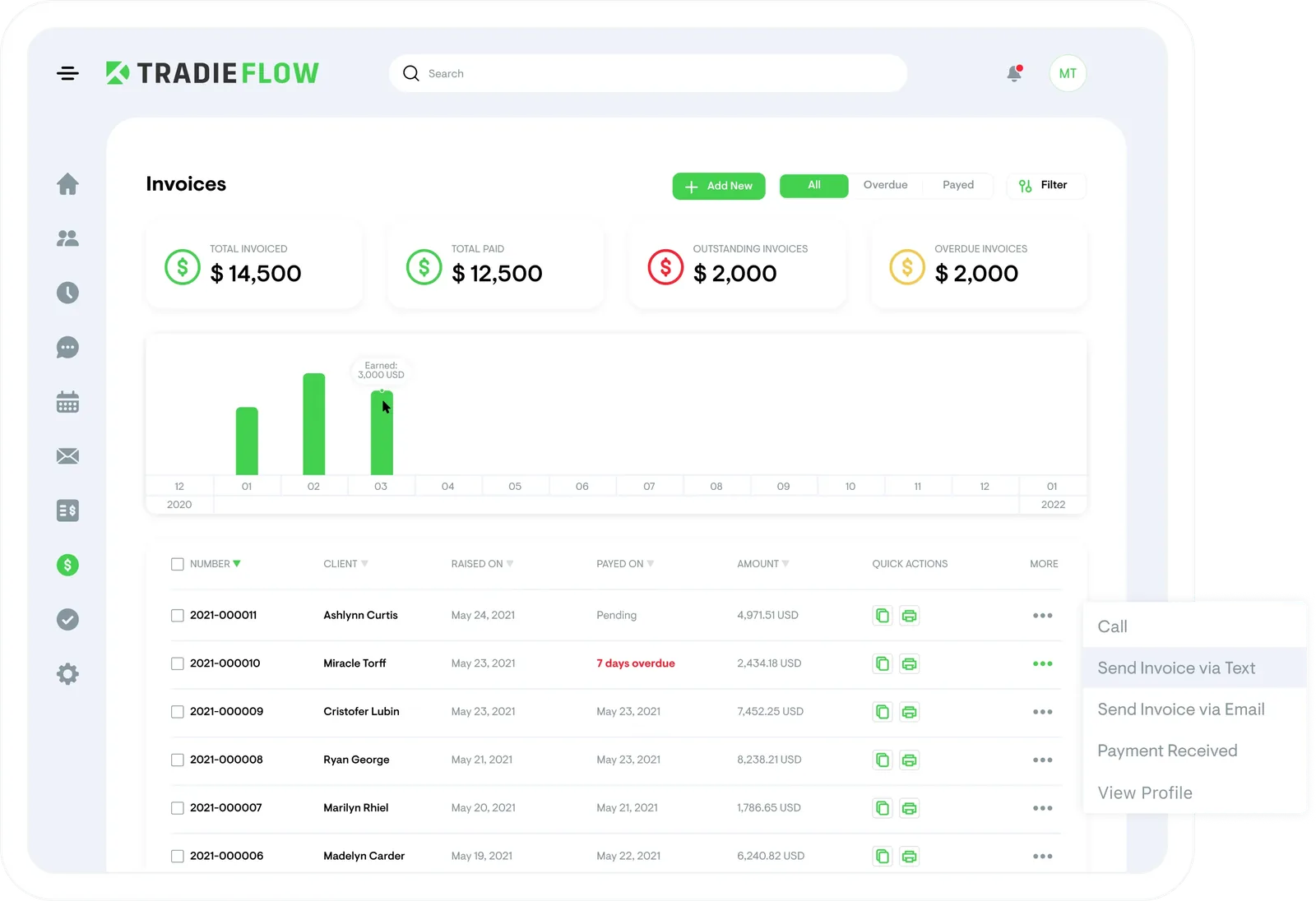
Invoices
Actions change with sales stage and status, so the next step is always the obvious one.
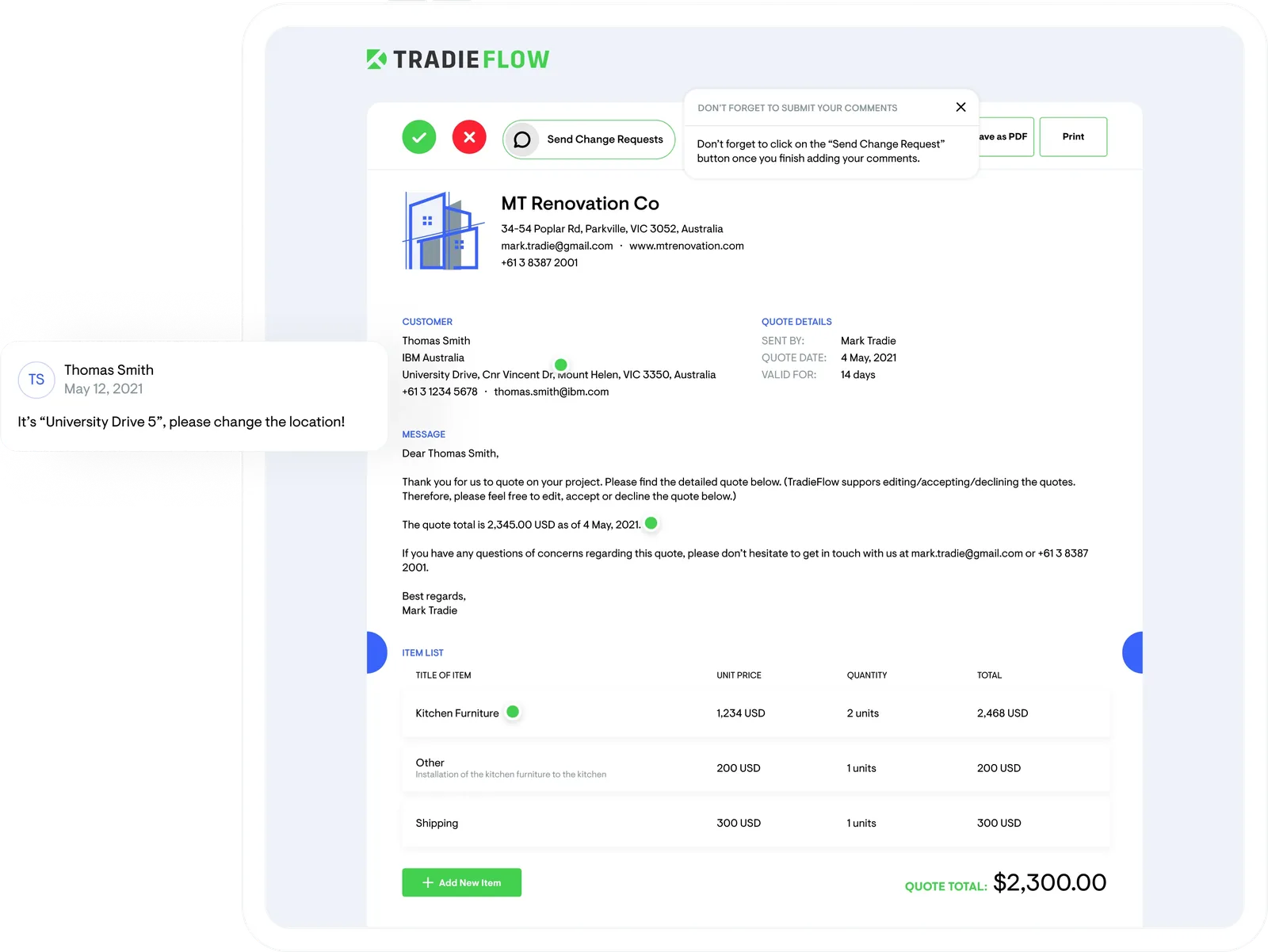
Quotes
Interactive, so clients can accept or comment without a phone call.
Payments
Stripe's own flow needed around 60 fields for verification. The alternative got it to 10.
What I do now
Most AI projects are theatre. I help you build the ones that aren’t.
An AI Reality Check scores every idea on your roadmap and hands back three lists — what is real, what is theatre, and what is blocked. One week, fixed price.