Archive · Communication
Making remote connections meaningful
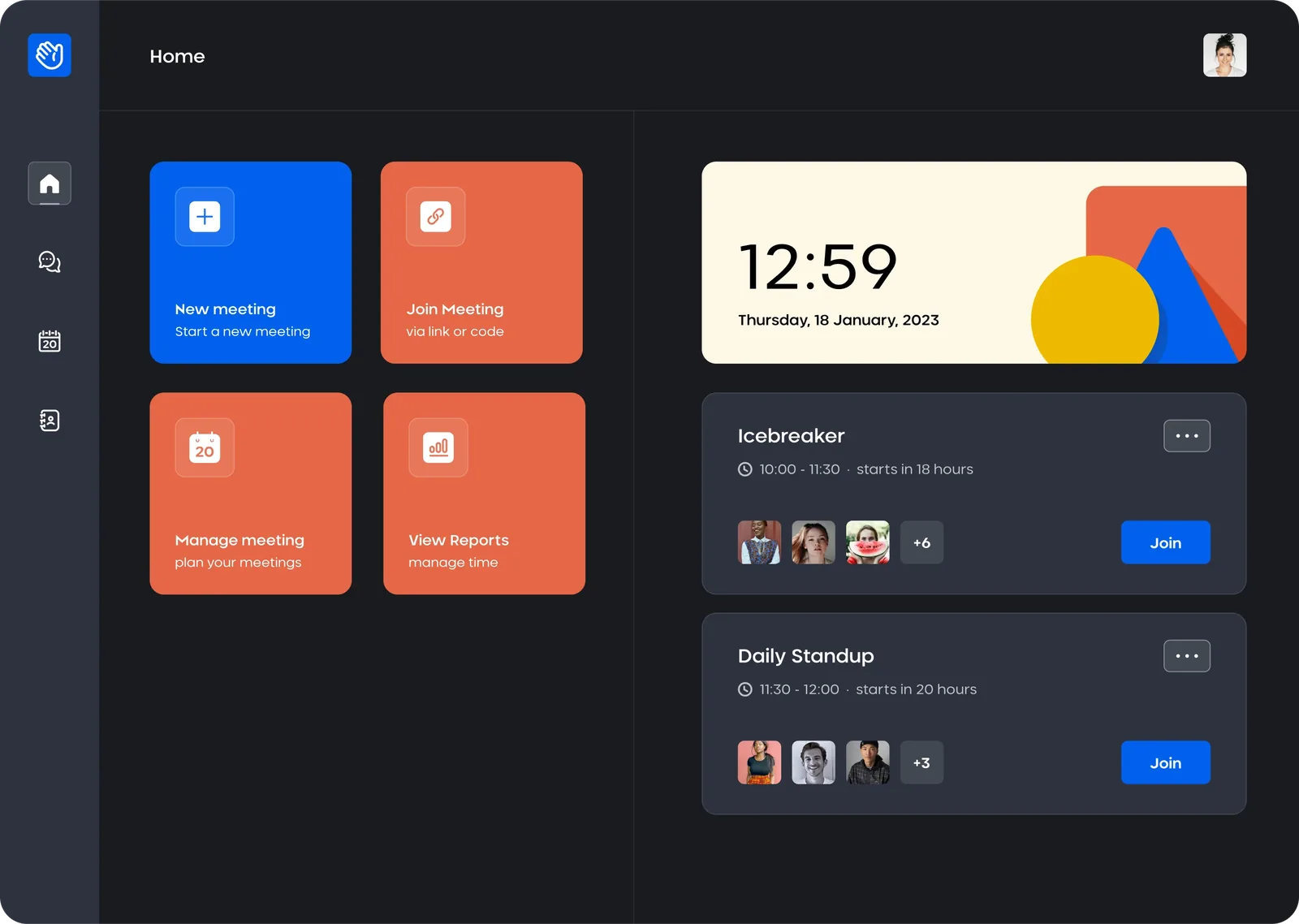
Mate, a video meeting tool for remote teams, built on interviews with 30 people who actually work that way.
This is earlier work, kept here because people still find it. The role titles below describe each engagement at the time. Olively today is an AI product consultancy — if that is what you are after, start with the AI Reality Check or the readiness scorecard.
The problem
What the work was actually for.
Remote work has a loneliness problem that team-building software mostly makes worse. The research is not ambiguous: 58% of people name lack of connection with colleagues as their top concern about working remotely, and 34% name isolation.
I interviewed 30 people across the American and European technology markets, all full-time remote. What came back was more specific than the survey data. 89% said it is hard to connect with colleagues, and that online team building does not help — because it focuses on playing a game rather than on knowing each other.
73% said eight hours a day is exhausting and that team-building meetings often leave them with less energy, not more. 67% said finding a new activity takes time nobody has, so nothing happens.
The context is documented rather than assumed. 58% of people name lack of connection with colleagues as their top concern about remote work and 34% name isolation, both from The Conference Board. Around 27.6 million people work primarily from home in the US, per Census.gov. The market was not in doubt; what the existing tools were getting wrong was.
The outcome
What actually changed.
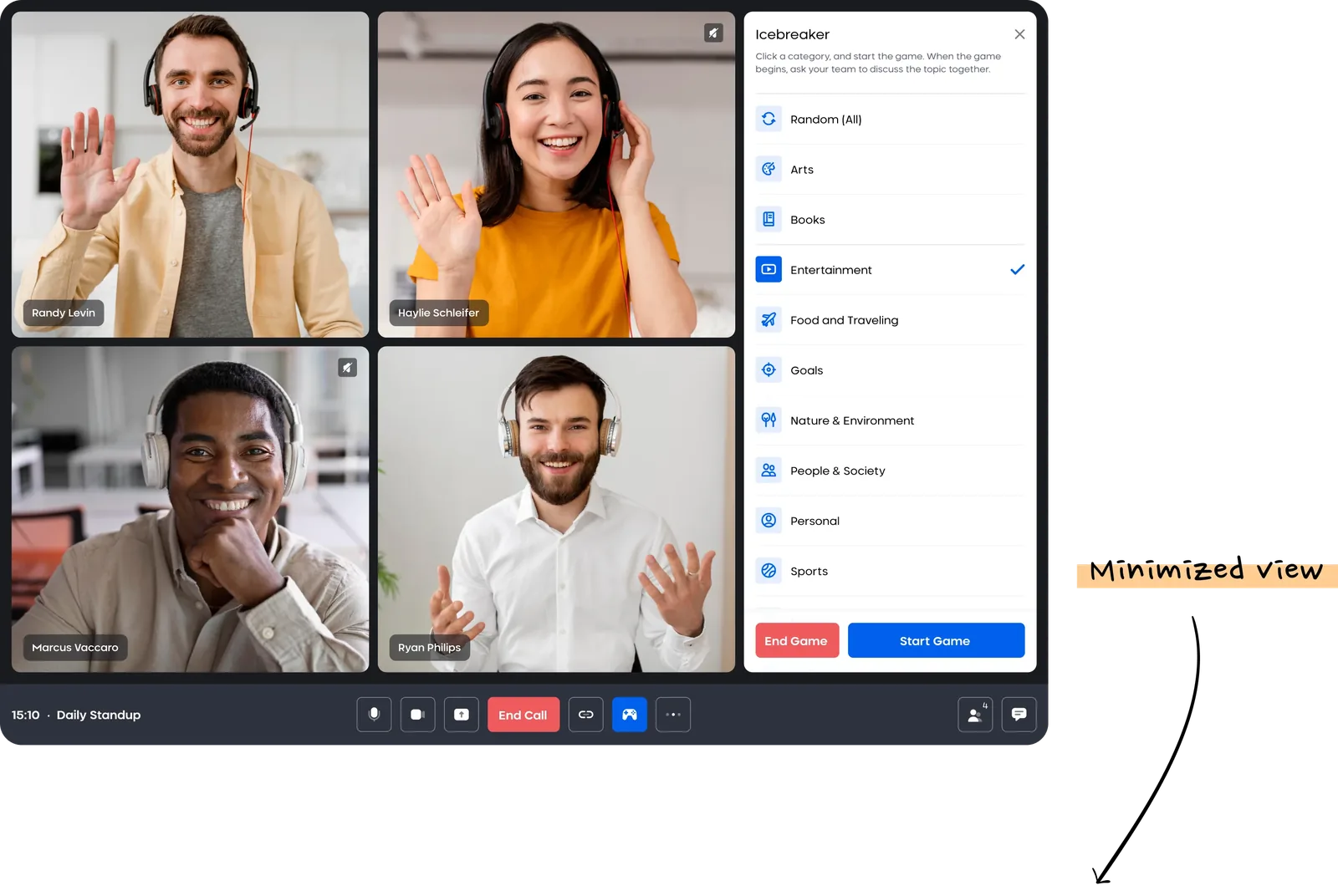
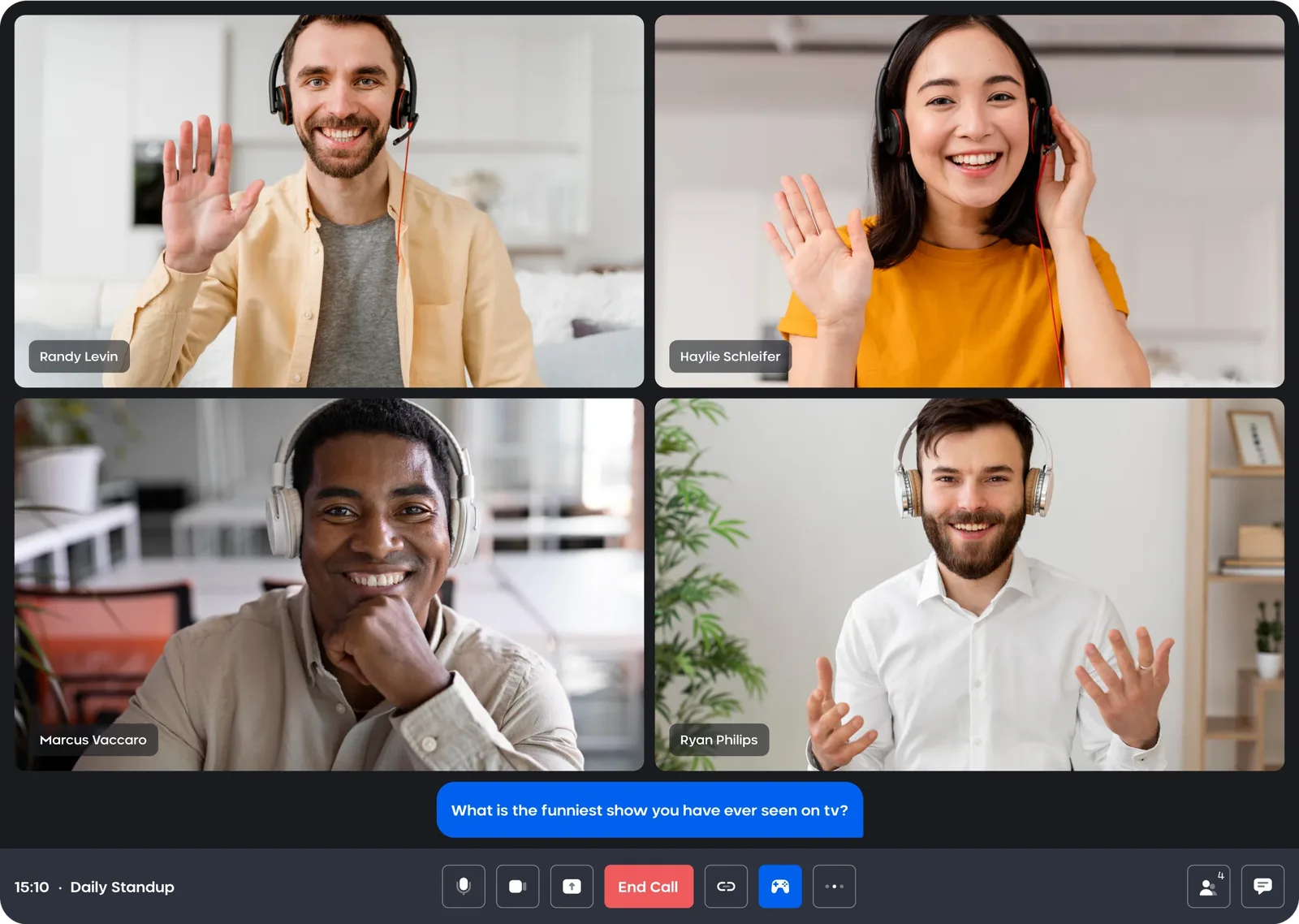
Twelve features and four games, built on the finding that the problem is not a shortage of activities — it is that the activities on offer do not help people know each other. Designing for connection rather than entertainment is a different brief, and the research is what made that visible.
The decisions
Three calls that shaped it.
Design for connection, not entertainment
The finding that shaped everything: 89% said online team building does not help them connect, because it focuses on playing a game rather than on knowing each other. Different brief entirely.
Put everything in one tool
67% said researching a new activity takes time nobody has, so nothing happens. A library that removes the search is worth more than any individual game in it.
Interview thirty people before scoping
Full-time remote workers across American and European tech. The survey data said isolation was a problem; the interviews said why the existing fixes were not fixing it.
What was hard
Three weeks for research, definition and design. The scope survived because features were cut against what the interviews actually surfaced rather than against what would demo well.
The work
What it looked like.
The research
Three findings from 30 interviews, each one contradicting something the existing tools assume.



The work
An all-in-one tool, because the alternative — a manager researching a new game every week — is exactly what 67% said stops them bothering.
What I do now
Most AI projects are theatre. I help you build the ones that aren’t.
An AI Reality Check scores every idea on your roadmap and hands back three lists — what is real, what is theatre, and what is blocked. One week, fixed price.